Melanotan 1 for Sale: A Comprehensive Research Guide
The search for melanotan 1 for sale has grown as researchers investigate this synthetic peptide analog of alpha-melanocyte stimulating hormone (α-MSH) for its potential applications in dermatological, neurobiological, and metabolic research. Melanotan 1, also known as afamelanotide, is a linear 13-amino acid peptide designed to be a more stable and potent version of the naturally occurring α-MSH. This comprehensive guide provides researchers with essential information about melanotan 1 peptide, its chemical properties, mechanism of action, research applications, quality considerations, and regulatory status.
Understanding Melanotan 1 Peptide
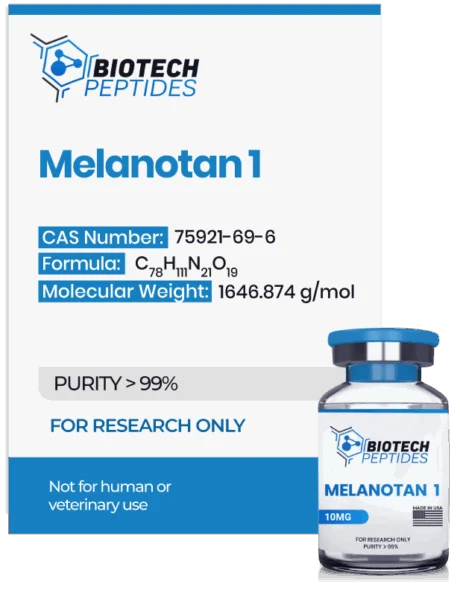
Melanotan 1 is a synthetic, linear tridecapeptide analog of alpha-melanocyte stimulating hormone, composed of 13 amino acids. The peptide has a molecular formula of C₇₈H₁₁₁N₂₁O₁₉ and a molecular weight of approximately 1646.85 g/mol. Its CAS number is 75921-69-6.
The peptide sequence is Ac-Ser-Tyr-Ser-Nle-Glu-His-D-Phe-Arg-Trp-Gly-Lys-Pro-Val-NH2. A key structural feature of melanotan 1 is the incorporation of norleucine at position 4 and D-phenylalanine at position 7, replacing the methionine and L-phenylalanine found in the endogenous α-MSH peptide. This modification significantly enhances the peptide’s stability and resistance to enzymatic degradation compared to the natural hormone.
Melanotan 1 is typically supplied as a white to off-white lyophilized powder. Research-grade products should demonstrate purity of at least 98% when analyzed by high-performance liquid chromatography.
Mechanism of Action Melanotan 1 for Sale
Melanotan 1 exerts its effects by acting as an agonist at melanocortin receptors, a family of G protein-coupled receptors. The primary target is the Melanocortin 1 Receptor (MC1R), predominantly found on melanocytes.
Activation of MC1R initiates a downstream signaling cascade that leads to melanogenesis, the production of the dark, photoprotective form of melanin known as eumelanin. This process involves the activation of adenylyl cyclase, increased intracellular cyclic AMP levels, and subsequent activation of protein kinase A. The phosphorylation of the microphthalmia-associated transcription factor (MITF) then upregulates the expression of melanogenic enzymes, including tyrosinase, which is the rate-limiting enzyme in melanin synthesis.
Unlike melanotan 2, melanotan 1 demonstrates greater selectivity for the MC1R receptor, with minimal binding to other melanocortin receptor subtypes. This receptor selectivity is an important consideration for researchers investigating specific melanocortin signaling pathways without the off-target effects associated with broader receptor activation.
Key Research Applications Melanotan 1 for Sale
Dermatological Research
Melanotan 1 has been investigated for its potential to induce melanogenesis, a process that may provide photoprotective benefits and mitigate the damaging effects of ultraviolet radiation on the skin. By promoting the production of eumelanin, melanotan 1 may support the skin’s natural defense mechanisms against UV-induced cellular damage.
The peptide has been studied in the context of conditions characterized by abnormal skin pigmentation or photosensitivity. Research has explored its potential to modulate melanin production, which may have implications for understanding and managing disorders of pigmentation.
Photoprotection Studies
Research has investigated melanotan 1 for its potential to protect the skin from UV-induced damage through the induction of melanogenesis. Studies suggest that by increasing cutaneous melanin levels, melanotan 1 may enhance the skin’s ability to absorb and scatter UV radiation, reducing the risk of cellular damage. This mechanism positions melanotan 1 as a valuable research tool for investigating photoprotective strategies.
Erythropoietic Protoporphyria Research
One of the most extensively studied applications of melanotan 1 is in the research of erythropoietic protoporphyria (EPP). EPP is a rare genetic disorder characterized by severe photosensitivity, where patients experience painful skin reactions upon exposure to sunlight. Afamelanotide, the pharmaceutical formulation of melanotan 1, has received approval in Europe for the prevention of phototoxicity in adult patients with EPP.
Research in EPP patients has demonstrated that melanotan 1 can significantly increase the duration of symptom-free sunlight exposure, improving quality of life and reducing the burden of phototoxic reactions. These findings highlight the potential of melanotan 1 as a therapeutic tool for research into photodermatoses.
Neurological and Metabolic Research
Beyond dermatological applications, the melanocortin system plays important roles in various physiological processes, including energy homeostasis, inflammation, and neuroprotection. Melanotan 1’s selective activity at the MC1R receptor positions it as a potentially useful research tool for investigating these broader roles without the off-target effects associated with less selective compounds.
Quality Considerations for Research Melanotan 1 Melanotan 1 for Sale
Purity Standards and Analytical Verification
For those seeking melanotan 1 for sale for research purposes, quality standards are essential. Research-grade melanotan 1 should demonstrate minimum purity specifications of at least 98% when analyzed by high-performance liquid chromatography. Many suppliers require a minimum 99% purity specification enforced at the batch level, with release contingent on verified analytical conformance.
High-purity research peptides are critical for experimental reproducibility. Impurities from synthesis, such as truncated sequences, deletion products, or oxidation byproducts, can confound experimental results and lead to unreliable data. Researchers seeking melanotan 1 for sale should prioritize suppliers that provide comprehensive analytical documentation.
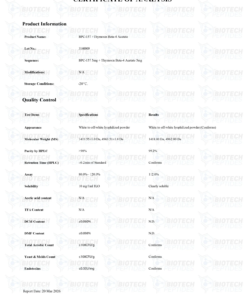
The certificate of analysis for research-grade melanotan 1 should include identity confirmation by mass spectrometry, purity by HPLC, sequence confirmation, and appearance testing. Additional testing may include residual solvent analysis, water content, acetate content, peptide content, endotoxin testing, and microbial limit testing.
Documentation Requirements Melanotan 1 for Sale
Legitimate suppliers providing melanotan 1 for sale should offer batch-specific Certificates of Analysis containing HPLC chromatograms and mass spectrometry identity confirmation. Third-party lab accreditation and pre-purchase document access are indicators of reliable sourcing. Researchers should verify that these documents are available before completing any transaction.
Documentation should include detailed information about peptide content, counterion presence, and storage recommendations. The peptide content, typically comprising more than 80% of the total weight, affects accurate dosing calculations in research protocols.
Storage and Handling Melanotan 1 for Sale
Melanotan 1 is typically supplied as a lyophilized powder, which helps preserve peptide stability during storage and transportation. Proper storage is essential for maintaining peptide integrity. Researchers should store lyophilized melanotan 1 at -20°C in a dry, desiccated environment protected from light. Upon reconstitution, the peptide should be stored at 4°C and used within a short timeframe to prevent loss of potency.
Repeated freeze-thaw cycles should be avoided to maintain peptide stability. Preparing aliquots of reconstituted melanotan 1 for single-use applications preserves compound integrity over extended research periods. Proper handling protocols ensure that experimental results reflect genuine biological phenomena rather than artifacts of degraded research materials.
Pricing and Market Considerations Melanotan 1 for Sale
Factors Influencing Melanotan 1 Pricing
Several factors influence melanotan 1 pricing for research applications. The scale of manufacture is a primary determinant, with per-unit production costs declining as peptide synthesis volumes increase. Quality control rigor also affects pricing, as comprehensive testing including HPLC purity analysis and mass spectrometry verification adds to manufacturing costs.
Documentation standards influence pricing, with suppliers providing batch-specific certificates of analysis and third-party verification typically charging premium prices. This documentation provides researchers with confidence in compound integrity and supports experimental reproducibility.
Volume Discounts and Bulk Purchasing Melanotan 1 for Sale
For laboratories with ongoing research programs, melanotan 1 pricing becomes more favorable through volume purchasing. Many suppliers offer tiered discount structures that reduce the per-unit cost for larger orders. Researchers planning extended studies should consider these discounts when calculating overall research costs.
The economy of scale effect means that larger quantities consistently offer lower per-milligram rates, making bulk purchasing a cost-effective strategy for well-funded research programs. Researchers should factor lead times into their procurement strategies, as larger quantities may require extended production schedules.
Regional Price Variations Melanotan 1 for Sale
Melanotan 1 pricing may vary across regions due to local market conditions, regulatory requirements, and distribution costs. Researchers in different geographic locations may encounter different pricing structures. When comparing melanotan 1 for sale options, researchers should factor in shipping costs, customs fees, and import duties to determine the total acquisition cost.
Regulatory Status and Legal Considerations Melanotan 1 for Sale
Melanotan 1 is classified as a research-use-only product for laboratory investigations. These compounds are not approved for human use outside of clinical trials and are intended exclusively for in-vitro laboratory research. Researchers must ensure compliance with all applicable regulations regarding the acquisition, handling, and use of research peptides in their jurisdiction.
It is important to note that afamelanotide, the pharmaceutical formulation of melanotan 1, has received approval in Europe for the treatment of erythropoietic protoporphyria. However, research-grade melanotan 1 for sale is not intended for human therapeutic use. The approved pharmaceutical formulation is manufactured under different standards and regulatory oversight than research-grade products. Researchers should understand this distinction when sourcing melanotan 1 for laboratory investigations.
Conclusion Melanotan 1 for Sale
Melanotan 1 for sale represents a significant research investment across multiple scientific disciplines, from dermatological and photoprotection studies to neurobiological and metabolic research. Its selective mechanism of action as an MC1R receptor agonist, combined with enhanced stability compared to native α-MSH, makes it a valuable research tool for investigating melanocortin signaling pathways.
For researchers acquiring melanotan 1, understanding the compound’s chemical properties, quality requirements, and pricing factors is essential. High-purity research-grade melanotan 1, stored and handled properly, provides a valuable tool for investigating fundamental biological processes. When evaluating suppliers, researchers should prioritize those that provide comprehensive quality documentation, including HPLC purity verification and mass spectrometry confirmation, to ensure experimental reproducibility and scientific validity.
The research applications of melanotan 1 continue to expand as understanding of melanocortin signaling deepens. From photoprotection and pigmentation research to neurological and metabolic studies, melanotan 1 remains a compound of significant interest for researchers committed to scientific discovery.