
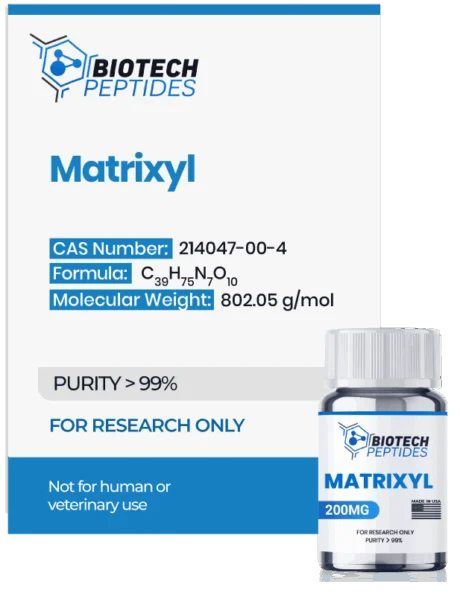
Matrixyl (200mg)
$150.00
matrixyl 3000 peptide, matrixyl peptide, matrixyl 3000 peptides, matrixyl synthe’6 complex 35, peptide face serum, matrixyl peptide serum, peptide matrixyl, peptide serum with matrixyl 3000, matrixyl peptide injections, matrixyl peptide skincare copper peptides & matrixyl 3000 serum + argireline reviews peptide, matrixyl 3000, peptides matrixyl 3000
Matrixyl 3000 Peptide: A Comprehensive Research Guide
Matrixyl 3000 peptide has become a significant subject of interest in cosmetic research, representing a trademarked blend of two synthetic peptides specifically designed to address visible skin aging. This guide provides researchers and formulators with essential information about Matrixyl 3000 peptide, its composition, mechanisms of action, and research applicationsv
Understanding Matrixyl 3000 Peptide
Matrixyl 3000 peptide is a trademarked synergistic peptide complex developed by Sederma, combining two specific messenger peptides: palmitoyl tripeptide-1, formerly known as palmitoyl oligopeptide, and palmitoyl tetrapeptide-7. These two peptides work synergistically to send repair signals through the skin’s surface, helping to mitigate visible skin damage and strengthen the skin’s supportive elements.
Both peptides in Matrixyl 3000 have undergone independent safety and toxicology reviews and were deemed safe by the Cosmetic Ingredient Review Expert Panel. The suggested usage concentration of Matrixyl 3000 is typically 3%, with a general use level ranging from 1% to 5% depending on the product type and formulation goals. It is important to note that the actual peptide concentration of this blend is much lower than the overall usage percentage, as peptides can work effectively in surprisingly low amounts.
The Two Peptides in Matrixyl 3000
Palmitoyl Tripeptide-1
Palmitoyl tripeptide-1 is a synthetic peptide composed of three amino acids: glycine, histidine, and lysine, known as GHK. This peptide corresponds to a fragment of type I collagen, reproduced in the laboratory to mimic sequences naturally present in the extracellular matrix of the dermis. The structure relies on a short peptide chain to which a lipid chain, palmitic acid, is attached, giving it the name palmitoyl tripeptide.
The addition of the palmitoyl group is significant for research applications. It alters the physicochemical properties of the molecule, increasing its lipophilicity and stability in cosmetic formulations. This modification also promotes interaction with the stratum corneum by facilitating affinity with epidermal lipids. Palmitoyl tripeptide-1 is therefore classified as a biomimetic peptide, designed to reproduce natural biological sequences.
In vitro studies demonstrate that palmitoyl tripeptide-1 functions as a signaling molecule, or matrikine, that stimulates fibroblasts to produce more collagen, elastin, and other extracellular matrix proteins. This process is believed to occur through the activation of the Transforming Growth Factor-β pathway, a critical regulator of extracellular matrix production. Palmitoyl tripeptide-1 also promotes tissue regeneration and repair mechanisms by supporting the synthesis of extracellular matrix components.
Palmitoyl Tetrapeptide-7
Palmitoyl tetrapeptide-7 is a synthetic peptide composed of four amino acids: glycine, glutamine, proline, and arginine, known as GQPR. Like palmitoyl tripeptide-1, this short peptide sequence is conjugated to palmitic acid, forming an amphiphilic molecule that enhances stability and compatibility with lipid environments. At a biochemical level, palmitoyl tetrapeptide-7 is classified among signal peptides, drawing on peptide fragments naturally involved in cellular communication processes.
The key in vitro activity of palmitoyl tetrapeptide-7 is its anti-inflammatory effect. Research indicates it can reduce the secretion of the pro-inflammatory cytokine Interleukin-6, particularly after exposure to UVB radiation. This anti-inflammatory action helps to prevent and reduce damage to the extracellular matrix, making it a valuable component for research into skin aging and photodamage.
Mechanism of Action and Synergistic Effects Matrixyl 3000 peptide
The two peptides in Matrixyl 3000 have distinct yet complementary mechanisms of action. Palmitoyl tripeptide-1 functions primarily as a stimulator of extracellular matrix synthesis, particularly collagen I, through the TGF-β pathway. Palmitoyl tetrapeptide-7 exhibits anti-inflammatory properties by downregulating IL-6 production. When combined, these peptides work synergistically to promote extracellular matrix health through both stimulation of collagen production and protection against inflammatory damage.
In vitro data for the combined peptide blend demonstrates a significant impact on the synthesis of key extracellular matrix components. Studies show that Matrixyl 3000 at a concentration of 5% stimulates collagen I production in human dermal fibroblasts by 117% compared to control groups. The blend also stimulates fibronectin and hyaluronic acid production, contributing to the overall integrity and resilience of the skin.
Research Applications and Formulation Considerations Matrixyl 3000 peptide
Matrixyl 3000 peptide is suitable for incorporation into a wide range of cosmetic formulations, including facial serums, creams, and lotions. Research applications include investigations into wrinkle reduction, skin firmness, elasticity improvement, and calming of visible signs of skin sensitization. The peptide blend is compatible with water-based and emulsion systems and is suitable for both day and night skincare products.
Formulators should note the following characteristics:
-
It can be added during the cooling phase of formulation
-
Typical use level ranges from 1% to 5%, depending on the product type
-
It is stable in a pH range of 3.0 to 8.0
-
It is ideal for leave-on applications
Clinical studies have demonstrated the efficacy of Matrixyl 3000 in improving visible signs of skin aging. In a placebo-controlled clinical trial, participants using Matrixyl 3000 at a concentration of 3% showed significant improvements in wrinkle depth, skin roughness, and overall skin appearance. These findings support the peptide blend’s role as an effective research tool for investigating skin aging mechanisms and potential interventions.
The peptide blend is typically supplied as a clear to slightly hazy liquid with a characteristic odor. It is soluble in water and readily dispersible in cosmetic formulations. Researchers should store Matrixyl 3000 at room temperature, protected from light, to maintain its stability and efficacy in research applications.
Conclusion Matrixyl 3000 peptide
Matrixyl 3000 peptide represents a significant advancement in peptide research for cosmetic applications. As a trademarked blend of palmitoyl tripeptide-1 and palmitoyl tetrapeptide-7, it combines the collagen-stimulating properties of one peptide with the anti-inflammatory benefits of another to create a synergistic effect on skin health. This dual mechanism of action makes Matrixyl 3000 a valuable research tool for investigating the complex processes involved in skin aging and repair.
For researchers in cosmetic science, understanding the chemical properties, mechanisms of action, and formulation considerations of Matrixyl 3000 peptide is essential for designing effective research protocols and developing innovative skincare solutions. The ability of this peptide blend to stimulate extracellular matrix production while simultaneously reducing inflammation positions it as a significant compound for advancing knowledge in dermatological and cosmetic research.
The proven efficacy of Matrixyl 3000 in clinical studies further validates its role as a research compound of interest. From stimulating collagen production to reducing inflammatory damage, Matrixyl 3000 continues to be a subject of investigation for researchers committed to understanding and addressing the biological processes underlying skin aging. As the field of peptide research continues to advance, Matrixyl 3000 remains a compound of significant interest for scientific discovery and innovation.
Related products
BIOTECH PEPTIDE

BIOTECH PEPTIDE
BIOTECH PEPTIDE

BIOTECH PEPTIDE
BIOTECH PEPTIDE

BIOTECH PEPTIDE

BIOTECH PEPTIDE
BIOTECH PEPTIDE