
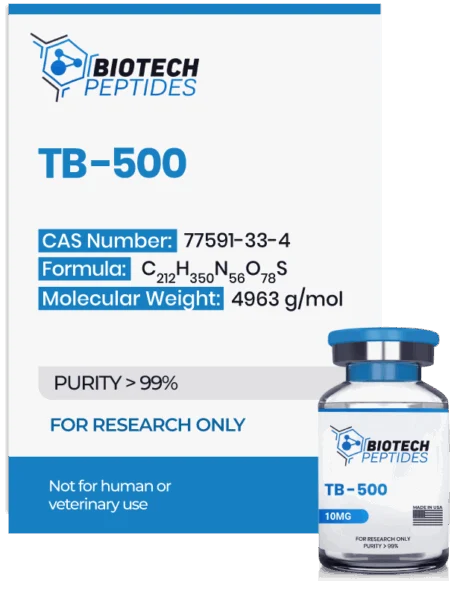
TB-500 (Thymosin Beta-4) (10mg)
$110.00
tb 500 peptide for sale, tb 500 peptide dosage, tb-500 peptide for sale, tb 500 peptide buy, peptide tb 500 bpc 157, peptides bpc-157 and tb-500, tb-500 peptide dosage, tb 500 peptide buy, tb 500 peptide, bpc-157 tb-500 peptide blend scientific research,
tb-500 peptide, bpc 157 tb 500 peptide, bpc-157 & tb-500 peptide benefits,
TB-500 Peptide: A Comprehensive Research Guide
TB-500 peptide is a synthetic peptide fragment derived from thymosin beta-4, a naturally occurring protein involved in tissue repair and regeneration. This 17-amino acid fragment corresponds to the active actin-binding region of the parent protein and has garnered significant attention in preclinical research for its potential applications in wound healing, tissue repair, and inflammation modulation. Researchers seeking TB-500 peptide for laboratory investigations must understand its chemical properties, research applications, quality considerations, and the current regulatory landscape.
Chemical Structure and Properties
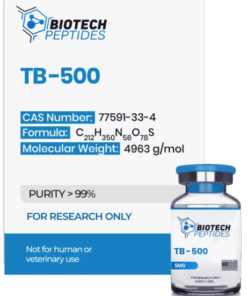
TB-500 is a synthetic peptide fragment corresponding to the amino acid sequence Ac-LKKTETQ, representing the active region (17LKKTETQ23) of thymosin beta-4. The peptide has a CAS Number of 885340-08-9, a molecular formula of C₃₈H₆₈N₁₀O₁₄, and a molecular weight of 889.01 g/mol. It is typically supplied as a white to off-white lyophilized powder with purity specifications of at least 95%, with many research-grade products achieving 98-99% purity.
Research-grade TB-500 should demonstrate identity confirmation by mass spectrometry, purity by HPLC, and sequence confirmation by MS/MS analysis. Proper storage is essential for maintaining peptide integrity. Lyophilized TB-500 should be stored at -20°C in a dry, desiccated environment protected from light. Upon reconstitution, the peptide should be stored at 4°C and used within a short timeframe to prevent loss of potency, with repeated freeze-thaw cycles avoided to maintain stability.
Mechanism of Action and Research Applications
Actin Binding and Cellular Migration
TB-500’s primary mechanism involves binding to actin, a key protein in cellular structure and movement. Thymosin beta-4 binds actin monomers, sequestering them and regulating actin filament dynamics. By virtue of its retained actin-binding sequence, TB-500 may similarly influence actin polymerization, modulate cytoskeletal rearrangements, and support cellular motility, migration, and repair-oriented behaviors.
The peptide fragment LKKTETQ has demonstrated biological functions beyond actin-binding, including exocytosis induction, dermal wound healing, angiogenesis, and hair growth. Research suggests that the metabolite Ac-LKKTE may exhibit significant wound-healing activity in fibroblast assays, raising the possibility that the active agent of TB-500-mediated pathways in research contexts may be one or more metabolites.
Tissue Repair and Wound Healing Research
TB-500 has been investigated for its potential applications in tissue repair and wound healing. As the parent molecule thymosin beta-4 is suggested to be upregulated during repair processes, TB-500 is thought to retain the core actin-binding fragment relevant to probing mechanisms of repair. Investigations suggest that TB-500 may enhance re-epithelialization, migration of keratinocytes, and deposition of collagen by influencing actin dynamics and cell motility.
The peptide has been explored for its ability to promote endothelial cell differentiation, angiogenesis in dermal tissues, keratinocyte migration, collagen deposition, and decrease inflammation. These properties make TB-500 relevant to researchers studying wound healing, tissue regeneration, and recovery processes. It is important to note that while preclinical and animal models have shown promise, human orthopaedic data are lacking, and significant research is required before definitive conclusions can be drawn.
Angiogenesis Research
An important aspect of tissue repair is the formation of new blood vessels. Research suggests that TB-500 may stimulate endothelial cell migration, tube formation, and capillary-like structures. Since actin filament dynamics are central to endothelial cell motility and sprout formation, TB-500 appears to act upstream in this cascade. As such, research indicates that TB-500 may be relevant as a research agent to explore how modulation of actin polymerization influences angiogenic responses, endothelial progenitor cell dynamics, or microvascular regeneration.
Musculoskeletal Research
Preclinical studies have suggested potential benefits of TB-500 in tendon and muscle repair. A 2025 review of injectable peptide therapy noted that TB-4 and its derivative TB-500 promoted angiogenesis and tissue repair in preclinical models, but human orthopaedic data are lacking. The peptide has been studied for its ability to reduce inflammation, promote new blood vessel growth, and support healing in muscles, tendons, and joints.
Neurological Research
Emerging investigations propose that thymosin beta-4 and, by analogy, its fragment TB-500 may have relevance to neural systems. Research suggests that TB-500 may influence oligodendrocyte activation, neuron-supporting cell phenotypes, and vascular and neural interplay following neural injury in research models. Because actin dynamics are crucial for neurite outgrowth, axonal re-routing, synaptic plasticity, and glial migration, TB-500 may present a tool for investigating how targeted manipulation of actin-modulating peptides may alter neural repair or regeneration.
Tissue Engineering and Biomaterials
In the context of engineered tissues and biomaterials, the potential of TB-500 to promote cellular migration, matrix deposition, and vascularisation suggests it may be integrated as a bioactive additive in scaffolds, hydrogels, or constructs. Such applications are speculative but plausible, with TB-500 potentially becoming a relevant reagent in advanced bioengineering research settings to modulate cellular behavior within engineered tissues.
Quality Considerations for TB-500 Research
Purity Standards and Analytical Verification
For those acquiring TB-500 peptide for research purposes, quality standards are essential. Research-grade TB-500 should demonstrate minimum purity specifications of at least 95% as analyzed by HPLC, with many suppliers offering products at 98-99% purity. High-purity research peptides are critical for experimental reproducibility, as impurities from synthesis can confound experimental results and lead to unreliable data.
Documentation should include batch-specific certificates of analysis containing HPLC chromatograms, mass spectrometry identity confirmation, sequence confirmation, and appearance testing. Additional testing may include residual solvent analysis, water content, acetate content, peptide content, endotoxin testing, and microbial limit testing.
Storage and Handling TB-500 peptide
TB-500 is typically supplied as a lyophilized powder, which helps preserve peptide stability during storage and transportation. Proper storage is essential for maintaining peptide integrity. Researchers should store lyophilized TB-500 at -20°C in a dry, desiccated environment protected from light. Upon reconstitution, the peptide should be stored at 4°C and used within a short timeframe to prevent loss of potency.
Repeated freeze-thaw cycles should be avoided to maintain peptide stability. Preparing aliquots of reconstituted TB-500 for single-use applications preserves compound integrity over extended research periods. Proper handling protocols ensure that experimental results reflect genuine biological phenomena rather than artifacts of degraded research materials.
Regulatory Status and Legal Considerations TB-500 peptide
TB-500 is not FDA-approved for any human therapeutic indication. As of April 2026, following the February 2026 reclassification, TB-500 is classified as an FDA 503A Category 2 bulk drug substance, meaning it is prohibited for use in compounded medications under Section 503A and 503B of the Federal Food, Drug, and Cosmetic Act. Full-length thymosin beta-4 occupies a separate regulatory track, having entered human clinical trials under an IND, but TB-500 specifically has not progressed through the same pathway.
The World Anti-Doping Agency has prohibited TB-500 in sports at all times under Section S2 of the 2026 Prohibited List. The peptide cannot be legally obtained through any licensed US pharmacy, and it is classified as a research-use-only product not intended for human consumption.
Research Limitations and Considerations TB-500 peptide
The current research evidence for TB-500 remains largely preclinical, with no completed human efficacy trials for musculoskeletal or tissue-repair indications published as of April 2026. Clinical data involving full-length thymosin beta-4 exists for other indications but does not transfer directly to the TB-500 fragment. A comprehensive literature review published in December 2025 emphasized that significant research regarding the safety and efficacy of peptide therapies is required before definitive recommendations can be made.
Conclusion TB-500 peptide
TB-500 peptide represents a compound of significant research interest across multiple scientific disciplines, from wound healing and musculoskeletal research to angiogenesis and neurological studies. Its unique mechanism of action, promoting actin polymerization and cellular migration, makes it a valuable research tool for investigating tissue repair and regeneration.
For researchers acquiring TB-500 peptide, understanding the compound’s chemical properties, quality requirements, and current regulatory landscape is essential. High-purity research-grade TB-500, stored and handled properly, provides a valuable tool for investigating fundamental biological processes. When evaluating suppliers, researchers should prioritize those that provide comprehensive quality documentation, including HPLC purity verification and mass spectrometry confirmation, to ensure experimental reproducibility and scientific validity.
The research applications of TB-500 continue to be explored as understanding of actin biology and tissue repair deepens. However, significant research is still required to validate the preclinical findings and establish the safety and efficacy of this peptide in human applications. Researchers working with TB-500 should maintain a thorough understanding of the current scientific literature and regulatory considerations to ensure compliance and experimental rigor in their investigations.
Related products
BIOTECH PEPTIDE
BIOTECH PEPTIDE
BIOTECH PEPTIDE
BIOTECH PEPTIDE
BIOTECH PEPTIDE
BIOTECH PEPTIDE
BIOTECH PEPTIDE
BIOTECH PEPTIDE