Chonluten for Sale: A Comprehensive Research Guide
Chonluten for sale has become a topic of growing interest among researchers investigating peptide bioregulators and their potential applications in respiratory health, gene expression, and immunomodulation. Chonluten, also known as the EDG tripeptide or T-34, is a synthetic peptide composed of three amino acids: glutamic acid, aspartic acid, and glycine. This comprehensive guide provides researchers with essential information about chonluten, its chemical properties, mechanism of action, research applications, quality considerations, and regulatory status for those seeking chonluten for sale.
Understanding Chonluten Peptide
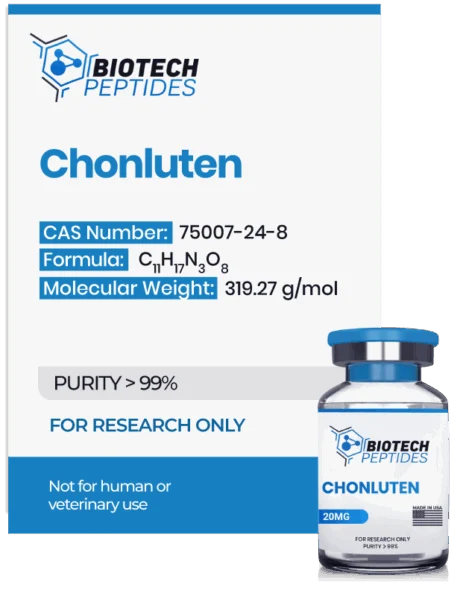
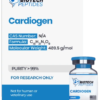
Chonluten is a short-chain peptide bioregulator belonging to the class of Khavinson Peptides, initially isolated from animal tissues and found to be organ-specific. The peptide has a molecular formula of C₁₁H₁₇N₃O₈ and a molecular mass of approximately 319.27 g/mol. Its chemical structure consists of glutamic acid, aspartic acid, and glycine, forming the tripeptide sequence EDG. Chonluten is derived from bronchial epithelial cells and is primarily researched for its potential to normalize the performance of bronchial mucous membrane cellsv
Chonluten is typically supplied as a lyophilized powder, with research-grade products demonstrating purity exceeding 99% when analyzed by high-performance liquid chromatography. Proper storage at -20°C in a dry, desiccated environment protected from light is essential for maintaining peptide integrity. Researchers seeking chonluten for sale should prioritize suppliers that provide comprehensive analytical documentation, including Certificates of Analysis with HPLC chromatograms and mass spectrometry identity confirmation. The typical unit size available for research is 20mg, with pricing varying based on quantity and supplier.
Mechanism of Action and Research Applications
Chonluten is hypothesized to operate through multiple molecular pathways, making it a versatile research tool. Its diminutive size is believed to allow it to penetrate cellular and nuclear membranes, potentially interacting directly with genomic regulatory regions. Investigations suggest that chonluten may bind to DNA promoter or suppressor sequences, or indirectly support epigenetic markers such as DNA methylation, thereby modulating the expression of genes associated with antioxidant pathways, stress response proteins, structural maintenance, and inflammatory mediators.
Gene Expression and Molecular Homeostasis Research
Research indicates that chonluten may normalize the expression of genes that encode antioxidant enzymes—particularly superoxide dismutase—potentially restoring redox balance in mucosal and epithelial contexts. Simultaneously, studies suggest that the peptide may downregulate the transcription of inflammatory genes—such as tumor necrosis factor-alpha and COX-2—which investigators suggest might mitigate inflammatory signaling cascades contributing to tissue injury. Chonluten has also been hypothesized to support epigenetic markers, such as DNA methylation, thereby modulating the expression of genes associated with cellular stress and survival.
It has been proposed that chonluten’s docking at transcriptional regulatory sites may fine-tune the synthesis of proteins like heat shock protein 70, COX-2, tumor necrosis factor-alpha, and c-Fos. By doing so, the peptide is thought to support transcriptional programs that govern cellular stress, survival, and structural integrity in mammalian research models.
Immunomodulation and Cytokine Regulation Research
Chonluten is believed to exert immunomodulatory properties by modulating the activation of immune-related genes and inhibiting pro-inflammatory cytokine networks. It has been hypothesized to support immune cell signaling pathways involving macrophages, dendritic-like cells, or T-lymphocytes, altering cytokine production and inflammatory status in research settings. This immunomodulatory potential is a key reason researchers seek chonluten for sale.
Studies have demonstrated that chonluten can modulate key proliferative patterns in immune cells, increasing tyrosine phosphorylation of mitogen-activated cytoplasmic kinases. Additionally, chonluten inhibits in vitro tumor necrosis factor production of monocytes exposed to pro-inflammatory bacterial lipopolysaccharide. These findings position chonluten as a compound of interest for researchers investigating immune regulation and inflammatory responses.
Respiratory and Mucosal Research
Given that chonluten is derived from bronchial epithelial cells, it has been investigated for its potential applications in respiratory and mucosal research. The peptide has been studied for its ability to support the structural and functional integrity of bronchial mucous membrane cells. Research suggests that chonluten may contribute to the maintenance of mucosal barrier function and the regulation of mucin production.
Studies have explored chonluten’s potential to support the recovery of bronchial epithelial cells following exposure to various stressors. The peptide’s ability to modulate gene expression related to cellular stress and structural proteins positions it as a valuable research tool for investigating respiratory health and disease mechanisms.
Cytoprotection and Cellular Stress Research
Chonluten has been investigated for its potential cytoprotective properties. Research suggests that the peptide may support cellular resilience against various forms of stress, including oxidative stress, inflammatory stress, and environmental insults. By modulating the expression of stress response proteins and antioxidant enzymes, chonluten may help maintain cellular homeostasis under challenging conditions.
The peptide’s potential to influence heat shock protein expression is particularly noteworthy. Heat shock proteins play a crucial role in cellular protection, protein folding, and stress adaptation. By modulating these proteins, chonluten may contribute to cellular survival and functional maintenance in research models.
Epigenetic Regulation Research
An emerging area of investigation involves chonluten’s potential role in epigenetic regulation. Researchers are exploring whether the peptide can influence DNA methylation patterns and histone modifications, which are key mechanisms of epigenetic control. This research could provide insights into how short peptides can influence long-term gene expression without altering the underlying DNA sequence.
Quality Considerations for Research Peptides
Purity Standards and Analytical Verification chonluten for sale
For those seeking chonluten for sale for research purposes, quality standards are essential. Research-grade chonluten should demonstrate minimum purity specifications of at least 98% when analyzed by high-performance liquid chromatography. Many suppliers require a minimum 99% purity specification enforced at the batch level, with release contingent on verified analytical conformance.
High-purity research peptides are critical for experimental reproducibility. Impurities from synthesis, such as truncated sequences, deletion products, or oxidation byproducts, can confound experimental results and lead to unreliable data. Researchers seeking chonluten for sale should prioritize suppliers that provide comprehensive analytical documentation.
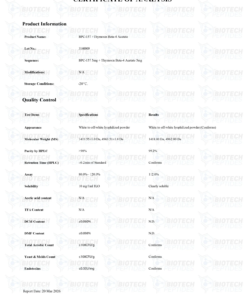
The certificate of analysis for research-grade chonluten should include identity confirmation by mass spectrometry, purity by HPLC, sequence confirmation, and appearance testing. Additional testing may include residual solvent analysis, water content, acetate content, peptide content, endotoxin testing, and microbial limit testing.
Documentation Requirements chonluten for sale
Legitimate suppliers providing chonluten for sale should offer batch-specific Certificates of Analysis containing HPLC chromatograms and mass spectrometry identity confirmation. Third-party lab accreditation and pre-purchase document access are indicators of reliable sourcing. Researchers should verify that these documents are available before completing any transaction.
Documentation should include detailed information about peptide content, counterion presence, and storage recommendations. The peptide content, typically comprising more than 80% of the total weight, affects accurate dosing calculations in research protocols.
Storage and Handling chonluten for sale
Chonluten is typically supplied as a lyophilized powder, which helps preserve peptide stability during storage and transportation. Proper storage is essential for maintaining peptide integrity. Researchers should store lyophilized chonluten at -20°C in a dry, desiccated environment protected from light.
Upon reconstitution, the peptide should be stored at 4°C and used within a short timeframe to prevent loss of potency. Repeated freeze-thaw cycles should be avoided to maintain peptide stability. Preparing aliquots of reconstituted chonluten for single-use applications preserves compound integrity over extended research periods.
Proper handling protocols ensure that experimental results reflect genuine biological phenomena rather than artifacts of degraded research materials. Researchers should maintain detailed records of storage conditions and handling procedures to ensure reproducibility across experiments.
Pricing and Market Considerations chonluten for sale
Factors Influencing Chonluten Pricing
Several factors influence chonluten pricing for research applications. The scale of manufacture is a primary determinant, with per-unit production costs declining as peptide synthesis volumes increase. Quality control rigor also affects pricing, as comprehensive testing including HPLC purity analysis and mass spectrometry verification adds to manufacturing costs.
Documentation standards influence pricing, with suppliers providing batch-specific certificates of analysis and third-party verification typically charging premium prices. This documentation provides researchers with confidence in compound integrity and supports experimental reproducibility.
Volume Discounts and Bulk Purchasing Chonluten for Sale
For laboratories with ongoing research programs, chonluten pricing becomes more favorable through volume purchasing. Many suppliers offer tiered discount structures that reduce the per-unit cost for larger orders. Researchers planning extended studies should consider these discounts when calculating overall research costs.
The economy of scale effect means that larger quantities consistently offer lower per-milligram rates, making bulk purchasing a cost-effective strategy for well-funded research programs. Researchers should factor lead times into their procurement strategies, as larger quantities may require extended production schedules.
Regional Price Variations
Chonluten pricing may vary across regions due to local market conditions, regulatory requirements, and distribution costs. Researchers in different geographic locations may encounter different pricing structures. When comparing chonluten for sale options, researchers should factor in shipping costs, customs fees, and import duties to determine the total acquisition cost.
Regulatory Status and Legal Considerations chonluten for sale
Chonluten for sale for research purposes is classified as a research-use-only product. These compounds are not approved for human use outside of clinical trials and are intended exclusively for in-vitro laboratory research. Researchers must ensure compliance with all applicable regulations regarding the acquisition, handling, and use of research peptides in their jurisdiction.
The regulatory landscape for research peptides continues to evolve, and researchers should maintain awareness of relevant guidelines and requirements. Chonluten remains an investigational compound not approved for therapeutic use, and researchers should clearly distinguish between research-grade products and pharmaceutical formulations.
Conclusion chonluten for sale
Chonluten for sale represents a significant research investment across multiple scientific disciplines, from respiratory and mucosal research to immunomodulation and epigenetic regulation studies. Its unique tripeptide structure and proposed mechanisms of action—involving gene expression modulation, cytokine regulation, and cytoprotection—make it a valuable research tool for investigating fundamental biological processes.
For researchers acquiring chonluten, understanding the compound’s chemical properties, quality requirements, and pricing factors is essential. High-purity research-grade chonluten, stored and handled properly, provides a valuable tool for investigating fundamental biological processes. When evaluating suppliers, researchers should prioritize those that provide comprehensive quality documentation, including HPLC purity verification and mass spectrometry confirmation, to ensure experimental reproducibility and scientific validity.
The research applications of chonluten continue to expand as understanding of peptide bioregulators deepens. From respiratory health and immune regulation to cellular stress responses and epigenetic control, chonluten remains a compound of significant interest for researchers committed to scientific discovery. As the field of peptide research advances, chonluten will undoubtedly continue to contribute to our understanding of fundamental biological processes and potential therapeutic interventions.