


Biotech Peptides Review: A Comprehensive Analysis of Research-Grade Peptides
Introduction to Biotech Peptides
Biotech peptides have emerged as fundamental tools in modern biomedical research, offering unprecedented precision for investigating cellular mechanisms, signaling pathways, and therapeutic interventions. A biotech peptides review reveals that these short chains of amino acids, typically containing between 2 and 50 residues, serve as essential research compounds across multiple scientific disciplines . The global peptide synthesis market reached approximately $1.9 billion in 2026, reflecting the growing importance of these compounds in scientific discovery .
This biotech peptides review examines the current landscape of research-grade peptides, their applications, quality considerations, and what researchers should look for when evaluating peptide products and suppliers.
The Science Behind Biotech Peptides biotech peptides review
What Makes Peptides Unique Research Tools
A thorough biotech peptides review must begin with understanding why these compounds are so valuable for research. Peptides occupy a unique position between small molecules and large proteins, offering advantages from both categories . Their relatively small molecular weight (typically 500–5000 Da) provides better interactions with protein targets due to increased availability of active sites, often leading to improved target specificity and reduced adverse effects .
Peptides are formed through the polymerization of amino acids via peptide bonds, created through dehydration reactions between carboxylic radicals and amines . The synthesis of peptides has evolved significantly since the first therapeutic peptide, insulin, was isolated in 1921. Today, solid-phase peptide synthesis (SPPS) represents the industry standard for manufacturing shorter peptide drugs, offering advantages in scalability and the ability to incorporate well-controlled chemical modifications .
Key Characteristics of Research-Grade Peptides biotech peptides review
Any comprehensive biotech peptides review highlights several defining characteristics that make these compounds valuable for research:
Target Specificity: Peptides exhibit high specificity for their biological targets, enabling researchers to investigate precise molecular pathways with minimal off-target effects . This specificity is largely driven by their amino acid sequence, which determines receptor binding and biological activity.
Biocompatibility and Biodegradability: Short peptides demonstrate excellent biocompatibility and biodegradability, making them suitable for various research applications including cell culture studies and tissue engineering . Their natural breakdown products are typically non-toxic and easily metabolized.
Programmable Design: The modular nature of peptides allows researchers to design sequences with specific biological functions. Biotech peptides can be engineered to modulate gene expression, influence cell differentiation pathways, and promote cell adhesion and growth . This programmability makes them versatile tools for studying stem cell behavior and tissue regeneration.
Current Applications in Research biotech peptides review
Regenerative Medicine and Tissue Engineering
A significant focus of any biotech peptides review is their role in regenerative medicine. Recent advancements have introduced promising strategies using short peptides that self-assemble into matrices mimicking the extracellular matrix (ECM) . These low molecular weight peptides exhibit target-specific activities, modulate gene expression, and influence cell differentiation pathways.
Researchers have identified specific peptides that direct stem cell differentiation into various lineages including neuronal, glial, myocardial, osteogenic, hepatocyte, and pancreatic cells . The concentration and structure of short peptides influence the direction of stem cell differentiation, making them valuable tools for tissue engineering applications.
Peptide-Biopolymer Conjugates biotech peptides review
The integration of peptides with natural biopolymers represents a transformative approach in biomaterial development. This biotech peptides review notes that functionalization of biopolymers such as nanocelluloses, hyaluronic acid, silk fibroin, alginate, chitosan, and gelatin with peptides creates multifunctional materials with enhanced responsiveness to physiological stimuli .
These materials demonstrate superior mechanical and chemical stability while supporting the growth, proliferation, and differentiation of various cell types including fibroblasts, keratinocytes, osteoblasts, and neuronal mesenchymal stem cells . The incorporation of peptides improves structural integrity and provides specific bio-recognition capabilities for targeted therapeutic interventions.
Biosensor Development biotech peptides review
Biotech peptides are increasingly utilized in biosensing technologies for disease detection and biomarker monitoring . The specific binding properties of peptides make them excellent recognition elements for diagnostic applications, contributing to the growing intersection of peptide research and medical diagnostics.
Therapeutic Applications biotech peptides review
Currently, over 100 peptides have secured market approval, with more than 150 actively undergoing clinical trials and an additional 400 to 600 in preclinical research stages . This biotech peptides review acknowledges the remarkable growth in peptide therapeutics, with the global market projected to reach $86.9 billion by 2032 .
Key therapeutic areas include metabolic disorders (particularly GLP-1 agonists for diabetes and obesity), antimicrobial peptides addressing multidrug-resistant bacteria, and cancer therapeutics utilizing peptide-based approaches . Peptides offer advantages over traditional small-molecule drugs including higher potency and selectivity, reduced toxicity, and minimal tissue accumulation .
Quality Considerations in Biotech Peptides
Purity Standards and Characterization
A critical aspect of any biotech peptides review is understanding quality benchmarks. Research-grade biotech peptides should meet minimum purity standards, typically 95% or higher when analyzed by high-performance liquid chromatography (HPLC). Premium research peptides often achieve 98% to 99% purity, minimizing impurities that could confound experimental results .
Mass spectrometry serves as an optimal method for evaluating authenticity and integrity of synthetic peptides. Typically, the sequence of a synthetic peptide is already established, directing focus toward validating its identity and purity through analytical techniques such as LC-MS and MALDI-TOF-MS .
The 2026 Peptide Industry Report outlines minimum acceptable documentation benchmarks for research procurement, including:
-
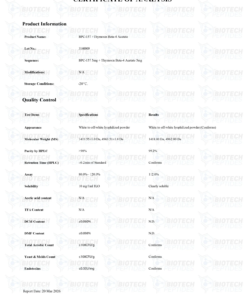
Batch-specific Certificates of Analysis (COAs) containing HPLC chromatograms
-
Mass spectrometry identity confirmation
-
Third-party lab accreditation
-
Pre-purchase document access
Impurity Considerations
Quality assessment of biotech peptides must address peptide-related impurities resulting from synthesis, storage, or degradation. These impurities may include insertions, deletions, substitutions, racemization, and β-alanine containing contaminants . Both synthetic and recombinant peptides are subject to degradation via mechanisms such as deamidation, oxidation, and disulfide bond formation during manufacturing and storage .
The characterization of peptide-related impurities cannot follow the small molecule approach but must consider aspects linked to the complex mechanisms of action these larger molecules exert in biological systems . From a regulatory perspective, specific risk identification and characterization should define safety thresholds in relation to potential toxicity .
Immunogenicity Risk Assessment
Some therapeutic peptides can trigger unwanted immune responses, making immunogenicity assessment an integral part of peptide development programs . Product-related immunogenicity risk is largely driven by the potential of the active ingredient to stimulate an immune response based on its origin and differences in sequence from self-proteins.
Impurities introduced during manufacturing and storage can potentially enhance the immunogenicity of peptide drug products and may promote immune-related adverse events . This underscores the importance of rigorous impurity characterization and control throughout the manufacturing process and shelf-life.
Chemical Modification Strategies
Enhancing Peptide Properties
Research continues to develop chemical strategies to address inherent limitations of peptides including salt sensitivity, brief circulation times, inadequate cellular uptake, and high structural flexibility . Key modification strategies include:
Lipidation: The conjugation of fatty acid moieties to peptides, as demonstrated with liraglutide and semaglutide, enhances affinity and target selectivity while improving pharmacokinetic properties .
Cyclization: Creating cyclic peptide structures stabilizes secondary structure and enhances targeting affinity. ALRN-6924, a lymphoma treatment drug currently in Phase II clinical trials, utilizes side-chain cyclization to stabilize its structure and boost antitumor activity .
Amino Acid Substitution: Replacing natural amino acids with their analogs can enhance affinity and specificity. Non-natural amino acids such as homoarginine, β-phenylalanine, and homoleucine can be incorporated during peptide synthesis .
PEGylation: The attachment of polyethylene glycol chains improves peptide stability and circulation time .
Glycosylation: The addition of carbohydrate moieties enhances bioactivity and compatibility .
Physicochemical Factors
The properties and biological activities of biotech peptides are closely related to five key physicochemical factors: charge, hydrophobicity, conformation, amphiphilicity, and sequence . Understanding these factors is essential for designing effective research protocols and interpreting experimental results.
Charge: Cationic peptide drugs, rich in positively charged amino acids (His, Arg, Lys), are pivotal in disrupting cell membranes and enhancing permeability. Research indicates that peptides with a net charge between +2 and +9 under physiological pH conditions exhibit good membrane-disrupting effects .
Evaluating Biotech Peptide Suppliers
Documentation Standards
A practical biotech peptides review for laboratory procurement must address supplier evaluation. The expansion of the peptide supply market has brought both new sourcing options and new quality risks. Documentation standards have become the primary differentiator between research-grade suppliers and those that fall short .
Red flags indicating elevated supply chain risk include:
-
Reused Certificates of Analysis
-
Missing mass spectrometry spectra
-
Post-purchase-only documentation availability
Operational Metrics
For laboratories seeking reliable biotech peptide sources, key operational metrics include:
-
On-time delivery rate (98% or higher recommended)
-
Response time (within 2-4 hours indicates dedicated customer service)
-
Reorder rate (high repeat order percentage reflects customer satisfaction)
-
Online revenue volume (indicates scale and transaction frequency)
Emerging Trends in Biotech Peptide Research
Artificial Intelligence Integration
The integration of artificial intelligence has accelerated peptide discovery, allowing for swift identification of bioactive sequences and structural optimization to enhance stability, efficacy, and target specificity . Machine learning algorithms predict peptide properties, receptor interactions, and biological activities, accelerating research progress.
Phage Display Technology
Recent advances in phage display technology have revolutionized peptide screening, enabling the rapid and efficient identification of billions of peptide candidates within a single day . This high-throughput approach expands the possibilities for discovering novel peptide sequences with specific biological activities.
Multifunctional Peptides
The development of peptides with dual or triple agonist activity represents a significant advancement. These compounds target multiple receptors simultaneously, enabling researchers to study synergistic effects and complex pathway interactions .
Cross-Industry Applications
Biotech peptides demonstrate extensive applications across diverse industries beyond biomedical research :
-
Medicine: Antibacterial, antiviral, and antitumor applications, with antimicrobial peptides emerging as promising alternatives against multidrug-resistant bacteria
-
Food Industry: Functional foods providing antihypertensive, antioxidant, and immunomodulatory effects
-
Cosmetics: Stimulation of collagen production, enhancement of skin regeneration, and anti-aging benefits
Conclusion
This biotech peptides review demonstrates the critical role these compounds play in advancing scientific research across multiple disciplines. From regenerative medicine and tissue engineering to biosensor development and therapeutic applications, biotech peptides offer researchers unprecedented tools for investigating biological mechanisms.
The continued growth of the peptide synthesis market—projected to reach $2.59 billion by 2031—reflects the increasing importance of these research compounds . As the field advances, researchers must prioritize quality when selecting biotech peptides for their work. Choosing compounds with documented purity, comprehensive characterization, and appropriate manufacturing standards ensures experimental results reflect genuine biological phenomena rather than artifacts of poor-quality research materials.
Understanding the science, applications, and quality considerations associated with biotech peptides enables researchers to maximize the value of their peptide-based investigations. With ongoing technological breakthroughs and interdisciplinary collaboration, biotech peptides will continue to offer innovative solutions for addressing complex biological questions and advancing scientific knowledge.
| Quantity | 1 bottle, 5 bottles, 10 bottles, 50 bottles |
|---|
Related products

BIOTECH PEPTIDE

BIOTECH PEPTIDE

BIOTECH PEPTIDE
BIOTECH PEPTIDE
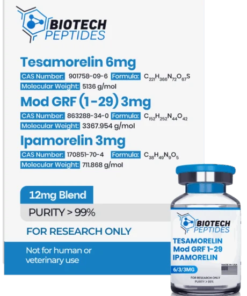
Tesamorelin & CJC-1295 (Mod GRF 1-29) & Ipamorelin Blend (12mg)
BIOTECH PEPTIDE
BIOTECH PEPTIDE

BIOTECH PEPTIDE
BIOTECH PEPTIDE