Cardiogen Peptide: A Comprehensive Research Guide
Cardiogen peptide has emerged as a subject of significant interest in cardiovascular and cellular research. This short-chain peptide bioregulator, with the amino acid sequence Ala-Glu-Asp-Arg (AEDR), represents a molecular tool for probing fibroblast activity, cardiomyocyte survival, and extracellular matrix dynamics in model systems. This comprehensive guide provides researchers with essential information about cardiogen peptide, its chemical properties, mechanism of action, research applications, quality considerations, and regulatory status.
Understanding Cardiogen Peptide
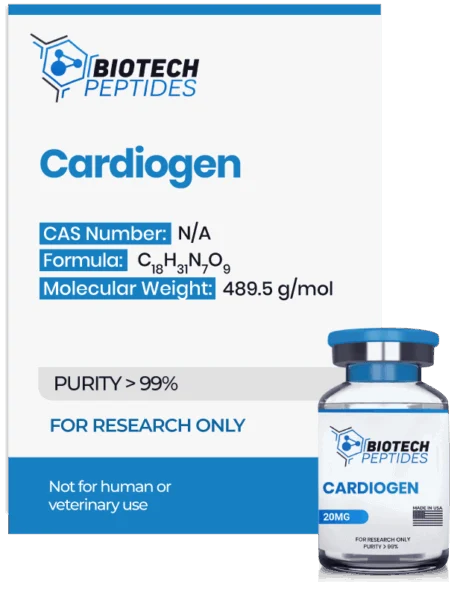
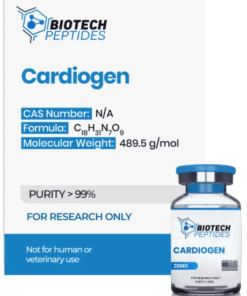
Cardiogen peptide is a synthetic tetrapeptide with the sequence H-Ala-Glu-Asp-Arg-OH, corresponding to a molecular formula of C₁₈H₃₁N₇O₉ and a molecular weight of approximately 489 Daltons. The peptide is a four-amino-acid sequence that promotes beta-turn formation and flexible conformational states, making it suitable for biophysical and mechanistic studies.
The cardiogen peptide is typically supplied as a lyophilized powder, with research-grade products demonstrating purity of at least 97% to 98% when analyzed by high-performance liquid chromatography. The CAS number for cardiogen peptide is 857267-11-9, and proper storage at -20°C in a dry, desiccated environment protected from light is essential for maintaining peptide integrity.
Researchers investigating cardiogen peptide should understand that this tetrapeptide is classified among the class of short biologically active peptides known as bioregulators. These compounds are characterized by their ability to influence cellular processes at relatively low concentrations, making them valuable tools for investigating fundamental biological mechanisms.
Mechanism of Action and Research Applications
Cardiac Tissue Research
Cardiogen peptide has been investigated for its potential to support cardiac tissue function. Research suggests that the primary activity of cardiogen peptide may involve regulating fibroblast proliferation and modulating cardiomyocyte apoptotic signaling. Studies indicate that cardiogen peptide may stimulate fibroblast-driven synthesis of extracellular matrix components, including collagen and elastin, thereby supporting structural integrity in myocardial repair contexts.
The ability of cardiogen peptide to influence fibroblast activity positions it as a valuable research tool for investigating the complex processes involved in cardiac remodeling and repair. Researchers studying myocardial infarction, heart failure, and other cardiac pathologies may find cardiogen peptide useful for exploring the cellular mechanisms underlying these conditions.
Cell Proliferation and Survival Studies
Cardiogen peptide has demonstrated significant effects on cell proliferation in tissue culture models. In comparative studies involving young and old rats, cardiogen peptide showed a great stimulating effect on proliferation both in tissues from young and old animals. Immunohistochemical studies demonstrated a decrease of the p53 protein expression by cardiogen peptide action, which suggests that cardiogen peptide may inhibit the apoptosis process in myocardial tissue.
This dual activity—supporting both fibrosis modulation and cell survival—positions cardiogen peptide as an intriguing agent for repair-oriented research models. Researchers investigating the molecular mechanisms of cell survival, proliferation, and programmed cell death may find cardiogen peptide a valuable addition to their experimental toolkit.
DNA Interaction Studies
Biochemical research has revealed interesting properties of cardiogen peptide regarding its interaction with nucleic acids. Studies have shown that cardiogen does not bind with single-stranded monotonous oligonucleotides and only slightly interacts with certain double-stranded oligonucleotides. However, cardiogen interacts with both unmethylated and methylated phage DNA-ethidium bromide complexes more strongly than other tested peptides.
Research indicates that cardiogen peptide can control endonuclease DNA hydrolysis, and this effect may be mediated through interaction with the enzyme rather than direct binding to DNA. These findings suggest that cardiogen peptide may influence gene expression through indirect mechanisms, potentially modulating the activity of enzymes involved in DNA processing and repair.
Gene Expression and Epigenetic Research
Beyond direct cellular outcomes, cardiogen peptide is theorized to support gene regulatory networks. Investigations suggest the peptide may modulate transcriptional activity of genes associated with cellular survival, repair, and matrix remodeling. Studies also suggest that cardiogen may support epigenetic markers, such as histone acetylation or methylation, in cardiomyocyte models, thereby altering gene expression over longer periods.
The potential of cardiogen to influence epigenetic modifications positions it as a compound of interest for researchers investigating the interface between peptide signaling and long-term gene regulation. Understanding how cardiogen peptide affects chromatin structure and gene expression could provide insights into the molecular mechanisms underlying its biological effects.
Oxidative Stress Research
Oxidative stress is a key factor in myocardial injury and dysfunction. Investigations suggest that cardiogen might interact with cellular antioxidant pathways, potentially attenuating the accumulation of reactive oxygen species within cardiomyocytes. By potentially supporting mitochondrial function and redox homeostasis, cardiogen appears to support cellular capacity to withstand stressors such as ischemia or metabolic challenges in model systems.
Researchers studying oxidative stress and its role in cardiovascular disease may find cardiogen \ useful for investigating potential protective mechanisms. The ability of cardiogen peptide to modulate cellular responses to oxidative stress could have implications for understanding myocardial injury and repair.
Fibroblast Biology Research
Fibroblasts play a crucial role in tissue repair and fibrosis. Cardiogen influence on fibroblast proliferation and extracellular matrix synthesis makes it valuable for investigating fibroblast biology. Researchers studying wound healing, tissue fibrosis, and remodeling processes may find cardiogen a useful tool for probing the molecular mechanisms underlying these phenomena.
The potential of cardiogen peptide to modulate fibroblast activity without promoting excessive fibrosis positions it as an interesting compound for research into balanced tissue repair. Understanding how cardiogen influences fibroblast function could provide insights into the regulation of extracellular matrix homeostasis.
Quality Considerations for Research Cardiogen Peptide
Purity Standards and Analytical Verification
For those acquiring cardiogen for research purposes, quality standards are essential. Research-grade cardiogen should demonstrate minimum purity specifications of at least 97% when analyzed by high-performance liquid chromatography. Many suppliers require a minimum 98% purity specification enforced at the batch level, with release contingent on verified analytical conformance.
High-purity research peptides are critical for experimental reproducibility. Impurities from synthesis, such as truncated sequences, deletion products, or oxidation byproducts, can confound experimental results and lead to unreliable data. Researchers seeking cardiogen peptide should prioritize suppliers that provide comprehensive analytical documentation.
The certificate of analysis for research-grade cardiogen peptide should include identity confirmation by mass spectrometry, purity by HPLC, sequence confirmation, and appearance testing. Additional testing may include residual solvent analysis, water content, acetate content, peptide content, endotoxin testing, and microbial limit testing.
Documentation Requirements
Legitimate suppliers providing cardiogen should offer batch-specific Certificates of Analysis containing HPLC chromatograms and mass spectrometry identity confirmation. Third-party lab accreditation and pre-purchase document access are indicators of reliable sourcing. Researchers should verify that these documents are available before completing any transaction.
Documentation should include detailed information about peptide content, counterion presence, and storage recommendations. The peptide content, typically comprising more than 80% of the total weight, affects accurate dosing calculations in research protocols.
Storage and Handling
Cardiogen is typically supplied as a lyophilized powder, which helps preserve peptide stability during storage and transportation. Proper storage is essential for maintaining peptide integrity. Researchers should store lyophilized cardiogen at -20°C in a dry, desiccated environment protected from light.
Upon reconstitution, the peptide should be stored at 4°C and used within a short timeframe to prevent loss of potency. The potency of reconstituted peptides cannot be guaranteed beyond 4 to 6 weeks. Repeated freeze-thaw cycles should be avoided to maintain peptide stability. Preparing aliquots of reconstituted cardiogen for single-use applications preserves compound integrity over extended research periods.
Proper handling protocols ensure that experimental results reflect genuine biological phenomena rather than artifacts of degraded research materials. Researchers should maintain detailed records of storage conditions and handling procedures to ensure reproducibility across experiments.
Regulatory Status and Legal Considerations
Cardiogen for research purposes is classified as a research-use-only product. These compounds are not approved for human use outside of clinical trials and are intended exclusively for in-vitro laboratory research. Researchers must ensure compliance with all applicable regulations regarding the acquisition, handling, and use of research peptides in their jurisdiction.
The regulatory landscape for research peptides continues to evolve, and researchers should maintain awareness of relevant guidelines and requirements. Cardiogen remains an investigational compound not approved for therapeutic use, and researchers should clearly distinguish between research-grade products and pharmaceutical formulations.
Conclusion
Cardiogen peptide represents a compound of significant research interest across multiple scientific disciplines, from cardiac tissue research and fibroblast biology to DNA interaction and oxidative stress investigations. Its unique tetrapeptide structure and dual modulatory potential—coordinating fibroblast matrix synthesis and cardiomyocyte survival signaling—make it a valuable research tool for investigating repair-oriented and regenerative pathways.
For researchers acquiring cardiogen , understanding the compound’s chemical properties, quality requirements, and pricing factors is essential. High-purity research-grade cardiogen , stored and handled properly, provides a valuable tool for investigating fundamental biological processes. When evaluating suppliers, researchers should prioritize those that provide comprehensive quality documentation, including HPLC purity verification and mass spectrometry confirmation, to ensure experimental reproducibility and scientific validity.
The research applications of cardiogen peptide continue to expand as understanding of peptide bioregulators deepens. From cardiac repair and fibroblast biology to oxidative stress and epigenetic regulation, cardiogen peptide remains a compound of significant interest for researchers committed to scientific discovery. As the field of peptide research advances, cardiogen peptide will undoubtedly continue to contribute to our understanding of fundamental biological processes and potential therapeutic interventions.