



Biotech Peptides: The Complete Guide to Research-Grade Peptides for Scientific Discovery
What Are Biotech Peptides?
represent a revolutionary class of research compounds that have transformed the landscape of modern scientific investigation. These short chains of amino acids, typically consisting of between 2 and 50 amino acid residues, serve as essential tools for researchers exploring cellular communication, metabolic pathways, and therapeutic interventions. Unlike traditional pharmaceuticals, biotech peptides are synthesized through advanced manufacturing processes that ensure exceptional purity, consistency, and biological activity, making them indispensable for cutting-edge laboratory research.
The biotechnology industry has witnessed an unprecedented surge in peptide-based research over the past decade. Biotech peptides are engineered to mimic naturally occurring proteins and hormones, allowing scientists to study complex biological mechanisms with remarkable precision. Their versatility spans multiple research domains, including endocrinology, neuroscience, immunology, and metabolic disorders, positioning biotech peptides as foundational elements in the pursuit of scientific advancement.
The unique properties of biotech peptides make them particularly valuable for research applications. Their relatively small molecular size allows for excellent tissue penetration and receptor binding specificity, while their synthetic nature ensures batch-to-batch consistency that is essential for reproducible experimental outcomes. Researchers working with biotech peptides benefit from compounds that are precisely characterized, highly purified, and rigorously tested to meet the demanding standards of contemporary scientific inquiry.
The Science Behind Biotech Peptides
Understanding the scientific foundation of biotech peptides is essential for researchers seeking to incorporate these compounds into their investigative protocols. Biotech peptides are constructed through solid-phase peptide synthesis, a sophisticated manufacturing process that assembles amino acids in precise sequences to create specific peptide chains. This approach enables the production of both naturally occurring sequences and novel analogs designed for targeted research applications.
The mechanism of action for biotech peptides varies depending on their specific structure and target receptors. Many biotech peptides function as receptor agonists or antagonists, binding to cellular receptors and either activating or blocking specific signaling pathways. This receptor specificity is what makes biotech peptides such powerful research tools, as they allow scientists to isolate and study individual biological pathways with minimal off-target effects.
Research has demonstrated that biotech peptides can modulate a wide range of physiological processes. Some peptides influence metabolic function by regulating insulin secretion, appetite control, and energy expenditure. Others affect endocrine function through interactions with growth hormone receptors or thyroid-stimulating hormone receptors. The diversity of biological activities exhibited by biotech peptides makes them applicable to virtually every area of biomedical research.
The stability and bioavailability of biotech peptides are critical considerations for research applications. Modern peptide engineering has produced compounds with enhanced resistance to enzymatic degradation, improved solubility, and extended half-lives that facilitate more practical research protocols. These advances have expanded the utility of biotech peptides beyond basic research into more complex experimental designs.
Key Applications of Biotech Peptides in Research
Bio-tech peptides have found extensive applications across numerous research disciplines, each leveraging the unique properties of these compounds to advance scientific understanding.
Metabolic Research: peptides play a central role in investigating metabolic disorders including obesity, diabetes, and metabolic syndrome. Researchers utilize peptide analogs to study glucose homeostasis, insulin sensitivity, and energy balance mechanisms. The development of GLP-1 receptor agonists and dual or triple agonists has opened new avenues for understanding metabolic regulation and potential therapeutic interventions.
Endocrine Studies: The endocrine system relies heavily on peptide hormones for signal transmission, making biotech peptides essential tools for endocrinologists. Research into growth hormone releasing hormones, thyroid stimulating hormones, and gonadotropin releasing hormones has been advanced significantly through the availability of high-purity peptide analogs that mimic endogenous hormone activity.
Neurological Research: Biotech peptides are increasingly important in neuroscience research. Peptides that cross the blood-brain barrier or influence neurotransmitter systems provide researchers with tools to study conditions such as cognitive decline, neurodegenerative disorders, and pain mechanisms. The specificity of peptide-receptor interactions allows for targeted investigation of complex neural pathways.
Immunology Applications: The immune system utilizes numerous peptide signals for communication between cells. peptides enable researchers to study immune cell activation, cytokine signaling, and inflammatory responses with unprecedented precision. These studies contribute to understanding autoimmune conditions, infectious diseases, and immunotherapies.
Cancer Research: The role of peptides in cancer biology continues to expand. Biotech peptides are used to study tumor growth factors, angiogenesis inhibitors, and cellular signaling pathways involved in malignancy. Peptide-based research has contributed to the development of targeted cancer therapies and diagnostic approaches.
Regenerative Medicine: Biotech peptides that influence cell differentiation, proliferation, and tissue repair are vital tools in regenerative medicine research. Studies investigating wound healing, tissue engineering, and stem cell biology frequently employ peptide compounds to modulate cellular behavior.
Quality Characteristics of Research-Grade Biotech Peptides
When selecting peptides for research applications, several quality characteristics distinguish superior compounds from inferior alternatives. Researchers must prioritize purity, potency, and consistency to ensure meaningful and reproducible experimental results.
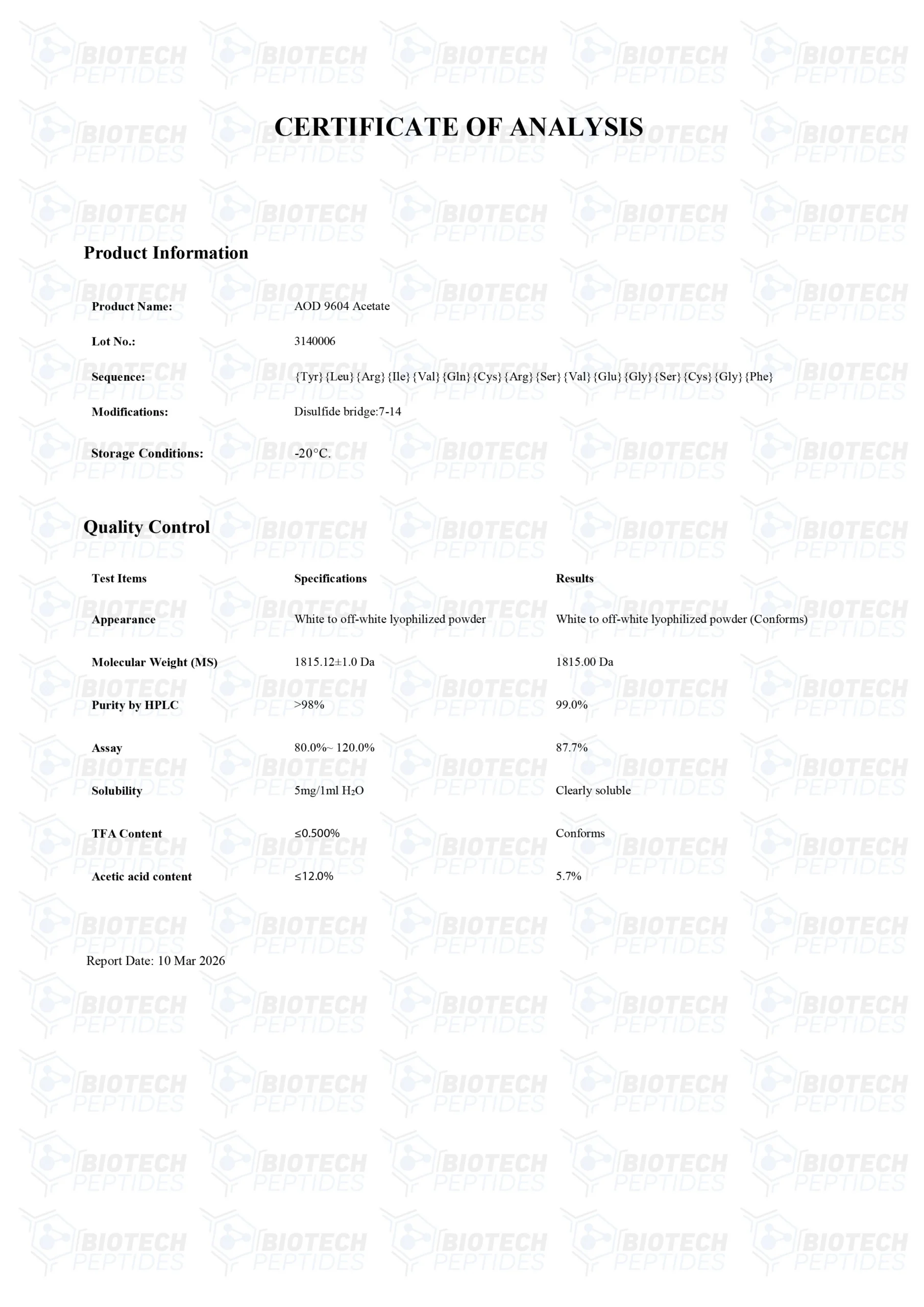
Purity Specifications: High-quality biotech peptides should demonstrate purity levels of 95% or higher when analyzed by high-performance liquid chromatography. Premium research peptides typically achieve 98% to 99% purity, minimizing the presence of truncated sequences, deletion products, or other synthesis-related impurities that could confound experimental results.
Mass Spectrometry Verification: Authentic biotech peptides should undergo mass spectrometry analysis to confirm molecular weight and structural integrity. This verification ensures that the peptide sequence matches the intended structure and that no unexpected modifications have occurred during manufacturing.
Appearance and Solubility: Research-grade biotech peptides typically present as lyophilized white powders that exhibit consistent solubility characteristics. Properly manufactured peptides should dissolve readily in appropriate solvents without excessive particulate formation or precipitation.
Storage Stability: The stability of biotech peptides under recommended storage conditions is essential for maintaining research integrity. Manufacturers should provide clear storage guidelines, typically requiring storage at -20°C or lower in desiccated, light-protected environments to preserve peptide integrity over extended periods.
Batch-to-Batch Consistency: Reputable manufacturers of biotech peptides maintain strict quality control protocols that ensure batch-to-batch consistency. This consistency is crucial for researchers conducting longitudinal studies or comparing results across multiple experiments.
Manufacturing Standards for Biotech Peptides
The production of peptides involves sophisticated manufacturing processes that must adhere to rigorous quality standards. Understanding these processes helps researchers appreciate the value of high-quality peptide products and make informed procurement decisions.
Solid-Phase Peptide Synthesis: This widely employed manufacturing approach builds peptide chains sequentially on insoluble resin supports. The process allows for controlled amino acid addition with high coupling efficiency and minimal side reactions. Advanced synthesizers automate this process, enabling reproducible production of peptides up to 50 amino acids in length.
Purification Technologies: Following synthesis, biotech peptides undergo extensive purification to achieve research-grade specifications. Preparative high-performance liquid chromatography is the standard approach, providing the resolving power necessary to separate target peptides from synthesis byproducts and impurities.
Quality Control Testing: Comprehensive quality control programs characterize biotech peptides through multiple analytical techniques. High-performance liquid chromatography assesses purity, mass spectrometry confirms molecular weight, and amino acid analysis verifies composition. Additional testing may include endotoxin screening and microbial limits testing.
Documentation and Traceability: Complete documentation accompanies authentic biotech peptides, providing researchers with detailed analytical data. Certificates of analysis should include purity percentages, chromatographic profiles, mass spectrometry results, and storage recommendations.
Selecting Biotech Peptides for Your Research
Choosing appropriate peptides for specific research applications requires consideration of multiple factors that influence experimental outcomes.
Sequence Specificity: The amino acid sequence determines the biological activity of peptides. Researchers must verify that the peptide sequence corresponds exactly to the target of interest, accounting for any species-specific variations that may affect receptor binding or biological activity.
Modification Requirements: Some research applications require modified biotech peptides incorporating chemical modifications that enhance stability, improve solubility, or enable detection. Common modifications include acetylation, amidation, and fluorescent labeling for tracking and quantification.
Research-Grade Specifications: Biotech peptides intended for research applications differ significantly from those used in clinical settings. Research-grade products prioritize purity and characterization over Good Manufacturing Practice compliance, though many manufacturers maintain high-quality production standards.
Packaging Considerations: The packaging of biotech peptides influences their stability and usability. Lyophilized peptides supplied in amber vials with moisture-resistant closures provide optimal protection against degradation factors.
Handling and Storage Protocols
Proper handling of peptides is essential for maintaining compound integrity and ensuring experimental reproducibility.
Temperature Management: should be stored at temperatures recommended by the manufacturer, typically -20°C or lower. Repeated freeze-thaw cycles should be avoided by preparing aliquots of reconstituted peptides for single-use applications.
Moisture Protection: Exposure to moisture can compromise peptide stability through hydrolysis or other degradation pathways. Storage in desiccated environments with minimal atmospheric exposure preserves peptide integrity.
Light Protection: Many biotech peptides are sensitive to light exposure, which can induce photodegradation or structural modifications. Amber glass or opaque containers provide necessary light protection during storage and handling.
Reconstitution Methods: Dissolving lyophilized biotech peptides requires appropriate solvents and techniques. Following manufacturer recommendations for solvent selection, concentration, and dissolution parameters ensures optimal peptide recovery and activity.
Emerging Trends in Biotech Peptide Research
The field of biotech peptide research continues to evolve rapidly, with several emerging trends shaping future investigations.
Multifunctional Peptides: The development of peptides with dual or triple agonist activity represents a significant advancement. These compounds target multiple receptors simultaneously, enabling researchers to study synergistic effects and complex pathway interactions.
Cyclic Peptides: Cyclization of peptide structures enhances stability and biological activity while improving pharmacokinetic properties. Research into cyclic peptide analogs continues to expand the utility of biotech peptides for challenging biological targets.
Peptide-Drug Conjugates: The conjugation of peptides to other therapeutic or diagnostic agents creates novel research tools. These hybrid molecules enable targeted delivery and combined mechanism studies.
Machine Learning Applications: Computational approaches increasingly inform peptide design and optimization. Machine learning algorithms predict peptide properties, receptor interactions, and biological activities, accelerating research progress.
Conclusion
Biotech peptides represent fundamental tools for contemporary biological research, enabling investigators to explore complex biological mechanisms with precision and reproducibility. The availability of high-purity, well-characterized peptides has expanded the boundaries of scientific knowledge across metabolic, endocrine, neurological, immunological, and oncological research domains.
Researchers who prioritize quality when selecting biotech peptides position their laboratories for success. By choosing compounds with documented purity, comprehensive characterization, and appropriate manufacturing standards, scientists ensure that their experimental results reflect genuine biological phenomena rather than artifacts of poor-quality research materials.
The continued advancement of peptide synthesis technologies, purification methods, and analytical characterization will further enhance the utility of peptides for research applications. As the field progresses, biotech peptides will undoubtedly remain essential tools for scientific discovery, contributing to our understanding of fundamental biological processes and potential therapeutic interventions.
For researchers committed to excellence in scientific investigation, biotech peptides offer unparalleled opportunities for discovery. By understanding the science, applications, and quality considerations associated with these remarkable compounds, researchers can maximize the value of their peptide-based investigations and contribute meaningfully to the advancement of scientific knowledge.
| Quantity | 1 bottle, 5 bottles, 10 bottles, 50 bottles |
|---|
Related products

BIOTECH PEPTIDE

BIOTECH PEPTIDE

BIOTECH PEPTIDE

BIOTECH PEPTIDE
BIOTECH PEPTIDE
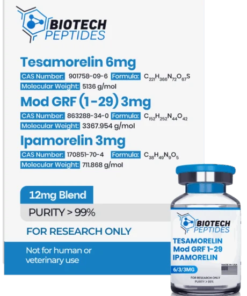
Tesamorelin & CJC-1295 (Mod GRF 1-29) & Ipamorelin Blend (12mg)

BIOTECH PEPTIDE
BIOTECH PEPTIDE

BIOTECH PEPTIDE