
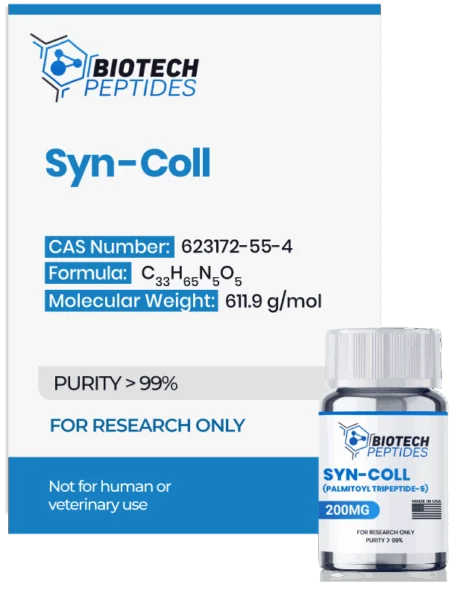
Syn-Coll (Palmitoyl Tripeptide-5) (200mg)


$180.00
palmitoyl tripeptide-5, palmitoyl tripeptide 5,palmitoyl tripeptide 5, buy palmitoyl tripeptide 5 for skin Syn-Coll
Palmitoyl Tripeptide-5: A Comprehensive Research Guide
Palmitoyl tripeptide-5 has emerged as a significant compound of interest in dermatological and cosmetic research, particularly for investigations into collagen synthesis, extracellular matrix modulation, and anti-aging mechanisms. Palmitoyl tripeptide-5 is a synthetic peptide composed of three amino acids attached to a palmitic acid molecule. This lipid-modified short peptide has been reported to stimulate collagen synthesis and suppress matrix metalloproteinase expression through transforming growth factor-beta related signaling pathways. This comprehensive guide provides researchers with essential information about palmitoyl tripeptide-5, including its chemical properties, mechanism of action, research applications, and quality considerations.
Understanding Palmitoyl Tripeptide-5
Palmitoyl tripeptide-5 is a synthetic peptide consisting of the sequence Pal-Lys-Val-Lys, where the palmitoyl group is attached to the N-terminus of the peptide chain. The chemical properties of palmitoyl tripeptide-5 include a molecular formula of C₃₁H₆₂N₆O₅ and a molecular weight of approximately 595.8 g/mol. Its CAS number is 623172-56-5.
Palmitoyl tripeptide-5 is a biomimetic peptide designed to mimic the natural sequences present in the extracellular matrix. The peptide is structurally composed of three amino acids: lysine, valine, and lysine, with a palmitic acid moiety attached to enhance lipophilicity and skin penetration. This lipid modification increases the peptide’s ability to interact with the stratum corneum and penetrate deeper layers of the skin.
The peptide is derived from a fragment of laminin, a major component of the extracellular matrix. This sequence is recognized by integrin receptors on the cell surface, which can trigger a signaling cascade that promotes the synthesis of extracellular matrix components. Palmitoyl tripeptide-5 acts as a matrikine, a signaling molecule derived from the breakdown of extracellular matrix proteins that can stimulate cellular responses.
Palmitoyl tripeptide-5 is typically supplied as a white lyophilized powder with purity specifications of at least 95% to 98% when analyzed by high-performance liquid chromatography. The peptide is soluble in water and ethanol, making it suitable for incorporation into various research formulations. Proper storage of palmitoyl tripeptide-5 at -20°C in a dry, desiccated environment protected from light is essential for maintaining peptide integrity. Upon reconstitution, the peptide should be stored at 4°C and used within a short timeframe to prevent loss of potency.
Mechanism of Action
Collagen Synthesis Stimulation
The primary mechanism of action of palmitoyl tripeptide-5 involves the stimulation of collagen synthesis. The peptide acts as a signal molecule that mimics the natural sequences found in the extracellular matrix. When palmitoyl tripeptide-5 interacts with cells, it can trigger a signaling cascade that promotes the production of extracellular matrix components, including collagen type I, the primary structural protein in the skin.
Palmitoyl tripeptide-5 functions as a matrikine, which is a peptide fragment derived from the breakdown of extracellular matrix proteins that can stimulate cellular responses. By mimicking these natural signaling molecules, palmitoyl tripeptide-5 can promote the synthesis of collagen and other extracellular matrix proteins, supporting the structural integrity and resilience of the skin.
The peptide’s mechanism involves the activation of transforming growth factor-beta signaling pathways, which are critical regulators of collagen synthesis. Transforming growth factor-beta is a key cytokine that promotes the production of collagen and other extracellular matrix proteins. By stimulating the release of transforming growth factor-beta, palmitoyl tripeptide-5 can enhance collagen production and support the maintenance of tissue structure.
Extracellular Matrix Modulation
Palmitoyl tripeptide 5 has been shown to modulate the extracellular matrix through multiple mechanisms. The peptide stimulates the synthesis of collagen and other extracellular matrix components, contributing to the maintenance and repair of tissue structure.
Palmitoyl tripeptide-5 also helps regulate the balance between collagen synthesis and degradation. The peptide can influence the activity of matrix metalloproteinases, which are enzymes responsible for breaking down collagen and other extracellular matrix proteins. This regulatory function contributes to the maintenance of extracellular matrix homeostasis.
Skin Barrier Support
Palmitoyl tripeptide 5 has been studied for its potential to support skin barrier function. The peptide can promote the synthesis of proteins and lipids that are essential for maintaining the integrity of the skin barrier. By supporting the production of these critical components, palmitoyl tripeptide-5 contributes to the maintenance of skin health and resilience.
Research Applications
Anti-Aging and Wrinkle Reduction Research
The primary research application of palmitoyl tripeptide 5 is in anti-aging and wrinkle reduction studies. Researchers investigating the molecular mechanisms underlying skin aging, collagen degradation, and extracellular matrix remodeling may find palmitoyl tripeptide-5 a valuable research tool. The peptide’s ability to stimulate collagen synthesis and modulate extracellular matrix turnover positions it as a compound of interest for researchers studying skin aging.
Studies have investigated the effects of palmitoyl tripeptide-5 on collagen production and skin structure in various models. Research has explored how the peptide influences the expression of collagen genes, the activity of matrix metalloproteinases, and the overall organization of the extracellular matrix. These investigations contribute to understanding the potential applications of palmitoyl tripeptide-5 in anti-aging research.
Wound Healing and Tissue Repair Studies
Palmitoyl tripeptide-5 has been investigated for its potential applications in wound healing and tissue repair research. The peptide’s ability to stimulate collagen synthesis and support extracellular matrix production makes it relevant for researchers studying tissue repair processes. Research has explored how palmitoyl tripeptide-5 influences the formation of new tissue, the organization of the extracellular matrix, and the overall healing process.
Cosmeceutical and Formulation Research
Palmitoyl tripeptide-5 has been studied in the context of cosmeceutical formulation research. Researchers have investigated the peptide’s stability, delivery, and efficacy in various formulation contexts. Studies have examined how palmitoyl tripeptide-5 interacts with other ingredients and how its activity can be optimized in research formulations.
The lipid modification of palmitoyl tripeptide-5 enhances its lipophilicity and skin penetration, making it suitable for incorporation into various research formulations. Researchers have explored how different delivery systems affect the peptide’s bioavailability and activity.
Combination Studies
Research has explored the potential of palmitoyl tripeptide-5 in combination with other bioactive compounds. Studies have investigated whether the peptide’s activity can be enhanced or modified by other ingredients, such as other peptides, antioxidants, or growth factors. These combination studies contribute to understanding the potential applications of palmitoyl tripeptide-5 in multi-ingredient formulations for anti-aging and skin health research.
Quality Considerations for Research Peptides
Purity Standards
For those acquiring palmitoyl tripeptide-5 for research purposes, quality standards are essential. Research-grade palmitoyl tripeptide-5 should demonstrate minimum purity specifications of at least 95% when analyzed by HPLC, with many suppliers offering products at 98% purity or higher. High-purity research peptides are critical for experimental reproducibility, as impurities from synthesis can confound experimental results.
Analytical Verification
When acquiring palmitoyl tripeptide-5, researchers should ensure the supplier provides comprehensive analytical documentation. The certificate of analysis should include identity confirmation by mass spectrometry, purity by HPLC, sequence confirmation, and appearance testing. Additional testing may include residual solvent analysis, water content, acetate content, peptide content, endotoxin testing, and microbial limit testing.
Documentation Requirements
Legitimate suppliers should offer batch-specific Certificates of Analysis containing HPLC chromatograms and mass spectrometry identity confirmation. Third-party lab accreditation and pre-purchase document access are indicators of reliable sourcing. Researchers should verify that these documents are available before completing any transaction.
Storage and Handling
Palmitoyl tripeptide 5 is typically supplied as a lyophilized powder, which helps preserve peptide stability during storage and transportation. Researchers should store lyophilized palmitoyl tripeptide 5 at -20°C in a dry, desiccated environment protected from light. Upon reconstitution, the peptide should be stored at 4°C and used within a short timeframe to prevent loss of potency.
Regulatory Status and Legal Considerations
Palmitoyl tripeptide 5 is classified as a research-use-only product for laboratory investigations. These compounds are not approved for human use outside of clinical trials and are intended exclusively for in-vitro laboratory research. Researchers must ensure compliance with all applicable regulations regarding the acquisition, handling, and use of research peptides in their jurisdiction.
Conclusion
Palmitoyl tripeptide-5 represents a compound of significant research interest across multiple scientific disciplines, from anti-aging and wrinkle reduction studies to wound healing and tissue repair research. Its unique mechanism of action, involving stimulation of collagen synthesis and modulation of extracellular matrix turnover, distinguishes it from other compounds and positions it as a valuable research tool for investigating extracellular matrix biology.
For researchers acquiring palmitoyl tripeptide-5, understanding the compound’s chemical properties, quality requirements, and research applications is essential. High-purity research-grade palmitoyl tripeptide 5, stored and handled properly, provides a valuable tool for investigating fundamental biological processes. When evaluating suppliers, researchers should prioritize those that provide comprehensive quality documentation, including HPLC purity verification and mass spectrometry confirmation, to ensure experimental reproducibility and scientific validity.
The research applications of palmitoyl tripeptide 5 continue to expand as understanding of extracellular matrix biology deepens. From anti-aging and skin health research to wound healing and tissue repair studies, palmitoyl tripeptide-5 remains a compound of significant interest for researchers committed to scientific discovery. As the field of peptide research advances, palmitoyl tripeptide-5 will undoubtedly continue to contribute to our understanding of fundamental biological processes and potential research applications.
Related products
BIOTECH PEPTIDE
BIOTECH PEPTIDE
BIOTECH PEPTIDE
BIOTECH PEPTIDE
BIOTECH PEPTIDE
BIOTECH PEPTIDE
BIOTECH PEPTIDE
BIOTECH PEPTIDE