
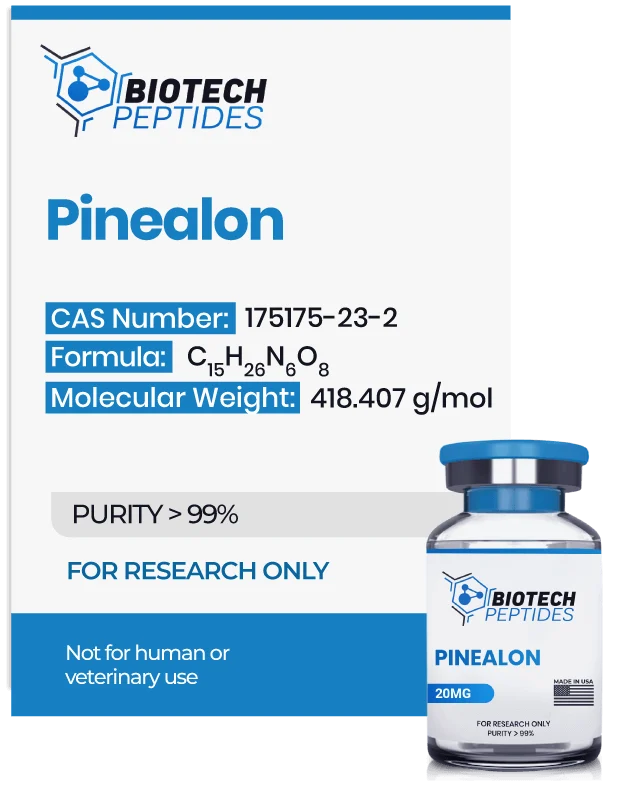
Pinealon peptide (20mg)
$50.00
Buy Pinealon Peptide research grade. High purity neuroprotective tripeptide. Bulk discounts available. Fast shipping. Secure checkout. Order now.
Pinealon Peptide: A Comprehensive Research Guide
Introduction to Pinealon Peptide
Pinealon peptide is a synthetic tripeptide composed of three amino acids: glutamic acid, aspartic acid, and arginine . This short peptide, with the one-letter code EDR and the sequence H-Glu-Asp-Arg-OH, has attracted research interest for its neuroprotective properties and its potential role in influencing central nervous system function .
With a molecular formula of C₁₅H₂₆N₆O₈ and a molecular weight of approximately 418.40 Daltons, Pinealon is classified as a short regulatory peptide . Its small size allows it to penetrate cellular membranes efficiently, facilitating interaction with cellular components . Initially studied within the context of gerontology and neuroprotection, Pinealon is being investigated as a potential geroprotective and neuroprotective agent . It is intended for research use only and is not approved for human clinical application .
Chemical Structure and Properties
Understanding the chemical properties of Pinealon is essential for any research application. The peptide’s full chemical name is (4S)-4-amino-5-[[(2S)-3-carboxy-1-[[(1S)-1-carboxy-4-(diaminomethylideneamino)butyl]amino]-1-oxopropan-2-yl]amino]-5-oxopentanoic acid .
Key chemical identifiers for Pinealon include:
-
CAS Number: 175175-23-2
-
Molecular Formula: C₁₅H₂₆N₆O₈
-
Molecular Weight: 418.40 g/mol
-
Sequence (One-Letter Code): EDR
-
Sequence (Three-Letter Code): H-Glu-Asp-Arg-OH
Researchers should note that the peptide may include counterions, such as acetate or trifluoroacetic acid (TFA), from the purification process . The presence of TFA salt can affect the peptide’s net weight, appearance, and solubility. TFA salts generally enhance the solubility of peptides in aqueous solutions, with the peptide content typically comprising more than 80% of the total weight .
Mechanism of Action and Biological Activity
Pinealon is reported to function through several mechanisms, providing a multi-faceted approach to cellular protection and function.
Neuroprotection and Oxidative Stress
Research has indicated that Pinealon shows significant neuroprotective properties . A primary mechanism is its ability to prevent the accumulation of reactive oxygen species, protecting cells from oxidative damage . Pinealon appears to suppress the activation of extracellular signal-regulated kinases 1/2, a key pathway involved in cellular stress responses .
Cellular Protection and Proliferation
Pinealon stimulates the functional activity of the main cellular elements of brain tissue and reduces the level of spontaneous cell death . In vitro studies have confirmed that Pinealon increases cell viability by suppressing free radical levels and activating proliferative processes, helping to maintain cellular homeostasis . This regulation of apoptosis and necrosis mechanisms is central to its neuroprotective profile .
Modulation of Gene Expression
Some research suggests Pinealon can interact with DNA and RNA, thereby modulating gene expression and influencing cellular processes . This capacity for molecular interaction underscores its potential as a regulatory peptide affecting neuronal activity and overall cellular health . Studies exploring the interaction of short peptides with DNA suggest they may modulate eukaryotic endonuclease activity, pointing toward epigenetic and gene-regulatory effects .
Research Applications Pinealon peptide
Pinealon has been the subject of research across multiple areas of health and disease, primarily focusing on its neuroprotective and cognitive-enhancing properties.
Cognitive Function and Neuroprotection
Investigations in older adults with subjective cognitive complaints or mild cognitive impairment have reported improvements in memory tests, attention, and information processing speed . In post-stroke or post-surgical populations, Pinealon has been associated with faster recovery of cognitive functions and daily activities . Studies have indicated that Pinealon protects rat offspring from prenatal hyperhomocysteinemia, a condition that can affect brain development .
Metabolic Health
Studies in individuals with metabolic syndrome or type 2 diabetes have reported modest effects on metabolic markers, including reductions in fasting glucose, HbA1c, improvements in lipid profiles, and decreased markers of systemic inflammation or oxidative stress . Some participants have also shown small reductions in blood pressure or waist circumference .
Clinical Trial Insights Pinealon peptide
Recent clinical investigations, though often early-phase and regional, are providing more structured evidence on Pinealon’s potential. The emerging clinical literature suggests multi-system effects consistent with its proposed role as a regulator of gene expression and cellular stress responses .
Efficacy Outcomes Pinealon peptide
In randomized controlled trials, Pinealon has shown modest but statistically significant improvements in cognitive performance compared with control or placebo groups. Outcomes often include better performance in verbal memory recall, increased concentration spans, and reduced subjective complaints of forgetfulness and mental fatigue . Beyond formal testing, patients frequently report enhanced overall well-being, improved sleep quality, and less daytime fatigue .
Safety Profile Pinealon peptide
Across recent clinical trials, Pinealon has generally demonstrated a favorable short-term safety profile. Adverse events are usually mild and transient, with injection-site discomfort, brief headaches, or nonspecific gastrointestinal symptoms reported in a small minority of participants . Laboratory monitoring has not revealed significant toxicity signals, even in older patients and those with pre-existing cardiovascular or metabolic conditions .
Limitations and Considerations of Pinealon peptide
Despite promising findings, the overall body of clinical data remains relatively small, and many trials are early-phase . Variability in trial design, dosing regimens, and outcome measures makes it challenging to consolidate results. Dosing regimens vary, with Pinealon usually given parenterally in short courses ranging from 10 to 20 days, sometimes repeated cyclically over several months . Follow-up durations are typically between 1 and 6 months, with relatively few trials extending beyond a year .
Quality Considerations for Research Peptides
Purity Standards
For research applications, Pinealon peptide should meet high purity standards. Research-grade products commonly exhibit purity levels of 95% or higher when analyzed by high-performance liquid chromatography . Higher purity minimizes the presence of synthesis-related impurities that could compromise experimental results.
Storage and Handling Pinealon peptide
Pinealon is typically supplied as a lyophilized powder and should be stored in a freezer at or below -20°C to maintain stability . Researchers should protect the peptide from light and moisture, reconstitute according to manufacturer specifications, and avoid repeated freeze-thaw cycles that could degrade the compound .
Conclusion Pinealon peptide
Pinealon peptide is a short tripeptide of research interest for its neuroprotective and potential geroprotective properties . Its primary mechanisms appear to involve preventing reactive oxygen species accumulation, suppressing ERK 1/2 activation, stimulating cellular functional activity, and reducing spontaneous cell death . Recent clinical investigations have reported modest cognitive improvements and metabolic changes alongside a generally favorable short-term safety profile .
Pinealon remains a research-use-only compound, and the current clinical evidence is considered preliminary . Further high-quality, large-scale, randomized controlled trials with standardized methodologies and longer follow-up periods are necessary to confirm its efficacy and long-term safety. For researchers, understanding the chemical properties, mechanisms, and current evidence base is essential for designing rigorous investigations and interpreting experimental outcomes.
Related products
BIOTECH PEPTIDE
BIOTECH PEPTIDE
BIOTECH PEPTIDE
Tesamorelin & CJC-1295 (Mod GRF 1-29) & Ipamorelin Blend (12mg)
BIOTECH PEPTIDE
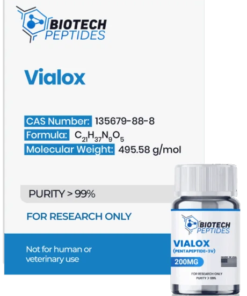
BIOTECH PEPTIDE
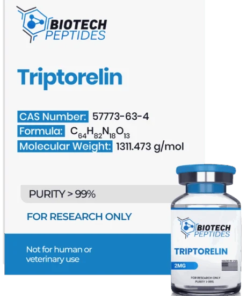
BIOTECH PEPTIDE
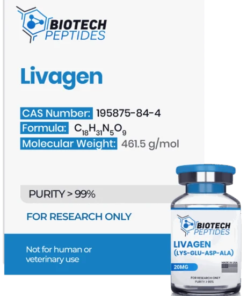
BIOTECH PEPTIDE
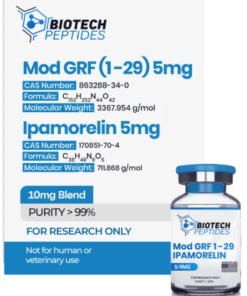
BIOTECH PEPTIDE