
Buy DSIP: A Comprehensive Research Guide
The decision to buy DSIP has become increasingly common among researchers investigating neuropeptides and their potential applications in sleep regulation, stress response, and neuroprotection. DSIP, or Delta-Sleep-Inducing Peptide, is a nonapeptide that was first discovered in the 1970s by the Swiss research group of Schoenenberger and Monnier, who isolated it from the cerebral venous blood of rabbits during electrical stimulation of the intralaminar thalamic nuclei. This comprehensive guide provides researchers with essential information for those looking to buy DSIP, covering its chemical properties, mechanism of action, research applications, quality considerations, and regulatory status.
Understanding DSIP
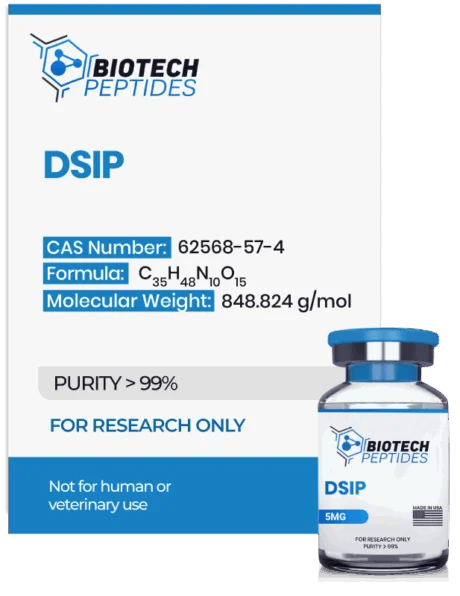
DSIP is a synthetic nonapeptide composed of nine amino acids with the sequence Trp-Ala-Gly-Gly-Asp-Ala-Ser-Gly-Glu. The chemical properties of DSIP include a molecular formula of C₃₅H₄₈N₁₀O₁₅ and a molecular weight of approximately 848.8 g/mol. Its CAS number is 62568-57-4.
DSIP is typically supplied as a lyophilized white powder with purity specifications of at least 97% to 99% when analyzed by high-performance liquid chromatography. Proper storage of DSIP at -20°C in a dry, desiccated environment protected from light is essential for maintaining peptide integrity. The peptide is soluble in sterile water or bacteriostatic water for reconstitution. Researchers seeking to buy DSIP should prioritize suppliers that provide comprehensive analytical documentation, including Certificates of Analysis with HPLC chromatograms and mass spectrometry identity confirmation.
DSIP is classified as a neuropeptide found in neurons, peripheral organs, and plasma. According to the National Institutes of Health, this neuropeptide induces mainly delta sleep in mammals. However, the scientific understanding of DSIP has evolved significantly since its discovery. While initially viewed primarily as a sleep-inducing agent, DSIP is now recognized as a multifunctional regulatory peptide with a wide range of potential physiological roles.
Mechanism of Action
DSIP exerts its effects through multiple pathways, making it a versatile research tool. The peptide’s biological activities are associated with its multifunctional nature, with research suggesting effects may be mediated through interactions with several neurological systems.
Sleep Regulation
The primary mechanism of DSIP involves its ability to promote slow-wave (delta) sleep. When infused into the brain ventricles of recipient rabbits, DSIP induced electroencephalogram patterns characterized by prominent delta and spindle waves, along with reduced motor activity. However, subsequent research has yielded variable results regarding the peptide’s sleep-inducing effects. In some studies, DSIP administration improved sleep in rats and rabbits, while others found no significant effects. These inconsistencies have led researchers to explore other potential roles for DSIP beyond sleep induction.
Stress Response and Neuroprotection
Research has demonstrated that DSIP has stress-protective properties, with the peptide being able to reduce stress in various models. Studies have shown that DSIP can reduce responses to acute stress and decrease the intensity of stress responses. Additionally, DSIP has been found to normalize corticosteroid levels in stressed animals. These findings suggest that DSIP may act as a regulatory factor in the body’s stress response system.
DSIP has also been investigated for its neuroprotective properties. Research suggests that the peptide may protect neurons from various forms of stress and injury, contributing to its potential applications in neurodegenerative research.
Antioxidant Effects
Research has indicated that DSIP and its carboxy-terminal fragment NPS-115 possess antioxidant properties. These effects may contribute to the peptide’s neuroprotective and stress-protective activities. Studies have explored how DSIP influences oxidative stress markers and cellular protection mechanisms.
Neuroendocrine Modulation
DSIP has been shown to modulate the hypothalamic-pituitary-adrenal axis, influencing the secretion of various hormones. This neuroendocrine modulation may underlie many of the peptide’s effects on stress, sleep, and other physiological processes. Researchers have investigated how DSIP influences corticosteroid levels and other hormonal markers in various experimental models.
Research Applications of DSIP
Sleep and Circadian Rhythm Research
DSIP has been investigated for its potential applications in sleep and circadian rhythm research. The peptide’s ability to promote slow-wave sleep has made it a subject of interest for researchers studying the neurobiological mechanisms underlying sleep regulation. Studies have explored how DSIP influences sleep architecture, electroencephalogram patterns, and sleep-wake cycles.
Researchers have also investigated the potential of DSIP to modulate circadian rhythms. The peptide’s effects on the hypothalamic-pituitary-adrenal axis and its interactions with other neuropeptides may contribute to its role in circadian regulation.
Stress and Anxiety Research
DSIP has been studied for its potential to modulate stress responses and anxiety-related behaviors. Research has demonstrated that DSIP can reduce stress responses in various animal models, suggesting that it may act as a regulatory factor in the stress response system. Studies have explored how DSIP influences corticosteroid levels, stress-induced behaviors, and physiological markers of stress.
The peptide’s stress-protective properties have made it a compound of interest for researchers investigating the neurobiology of stress and anxiety. Studies have examined how DSIP interacts with other stress-related neuropeptides and neurotransmitter systems.
Neuroprotection and Neurodegeneration Research
DSIP has been investigated for its potential neuroprotective effects. Research suggests that the peptide may protect neurons from various forms of stress and injury, contributing to its potential applications in neurodegenerative research. Studies have explored how DSIP influences oxidative stress markers, cellular protection mechanisms, and neuronal survival.
Researchers have investigated the potential of DSIP to modulate neuroinflammatory responses and support neuronal health. These studies have contributed to understanding the role of neuropeptides in neuroprotection and neurodegeneration.
Pain Research
DSIP has been studied for its potential analgesic effects. Research has explored how the peptide influences pain perception and nociceptive pathways. Studies have examined the effects of DSIP on various pain models and its interactions with other analgesic systems.
Endocrine Research
DSIP’s effects on the hypothalamic-pituitary-adrenal axis have made it a compound of interest for endocrine research. Studies have explored how DSIP influences hormone secretion, including corticosteroid levels and other hormonal markers. Researchers have investigated the peptide’s role in regulating the stress response system and its interactions with other endocrine pathways.
Quality Considerations When You Buy DSIP
When researchers decide to buy DSIP, quality considerations are paramount for ensuring experimental reproducibility and scientific validity.
Purity Standards
Research-grade DSIP should demonstrate minimum purity specifications of at least 97% when analyzed by high-performance liquid chromatography. Many suppliers require a minimum 98% to 99% purity specification enforced at the batch level, with release contingent on verified analytical conformance. High-purity research peptides are critical for experimental reproducibility, as impurities from synthesis can confound experimental results.
Analytical Verification
When you buy DSIP, ensure the supplier provides comprehensive analytical documentation. The certificate of analysis should include identity confirmation by mass spectrometry, purity by HPLC, sequence confirmation, and appearance testing. Additional testing may include residual solvent analysis, water content, acetate content, peptide content, endotoxin testing, and microbial limit testing.
Documentation Requirements buy DSIP
Legitimate suppliers from whom you buy DSIP should offer batch-specific Certificates of Analysis containing HPLC chromatograms and mass spectrometry identity confirmation. Third-party lab accreditation and pre-purchase document access are indicators of reliable sourcing. Researchers should verify that these documents are available before completing any transaction.
Storage and Handling
DSIP is typically supplied as a lyophilized powder, which helps preserve peptide stability during storage and transportation. Researchers who buy DSIP should store lyophilized peptide at -20°C in a dry, desiccated environment protected from light. Upon reconstitution, the peptide should be stored at 4°C and used within a short timeframe to prevent loss of potency.
Repeated freeze-thaw cycles should be avoided to maintain peptide stability. Preparing aliquots of reconstituted DSIP for single-use applications preserves compound integrity over extended research periods. Proper handling protocols ensure that experimental results reflect genuine biological phenomena rather than artifacts of degraded research materials.
Regulatory Status and Legal Considerations buy DSIP
DSIP is classified as a research-use-only product for laboratory investigations. These compounds are not approved for human use outside of clinical trials and are intended exclusively for in-vitro laboratory research. Researchers who buy DSIP must ensure compliance with all applicable regulations regarding the acquisition, handling, and use of research peptides in their jurisdiction.
The regulatory landscape for research peptides continues to evolve. DSIP is not FDA-approved for any clinical indication and is available only for research purposes. Researchers should maintain awareness of regulatory changes that may affect the acquisition and use of research peptides.
Conclusion buy DSIP
DSIP represents a significant peptide of research interest across multiple scientific disciplines, from sleep and circadian rhythm research to stress, neuroprotection, and endocrine studies. Its multifunctional nature and complex mechanism of action make it a valuable research tool for investigating fundamental biological processes.
For researchers looking to buy DSIP, understanding the compound’s chemical properties, quality requirements, and research applications is essential. High-purity research-grade DSIP, stored and handled properly, provides a valuable tool for investigating fundamental biological processes. When evaluating suppliers from whom to buy DSIP, researchers should prioritize those that provide comprehensive quality documentation, including HPLC purity verification and mass spectrometry confirmation, to ensure experimental reproducibility and scientific validity.
The research applications of DSIP continue to expand as understanding of neuropeptide biology deepens. From sleep regulation to stress response and neuroprotection, DSIP remains a compound of significant interest for researchers committed to scientific discovery. However, researchers should maintain awareness of the regulatory status and ensure compliance with all applicable regulations regarding the acquisition, handling, and use of research peptides in their jurisdiction.
Related products

BIOTECH PEPTIDE

BIOTECH PEPTIDE
BIOTECH PEPTIDE

BIOTECH PEPTIDE

BIOTECH PEPTIDE
BIOTECH PEPTIDE
BIOTECH PEPTIDE
BIOTECH PEPTIDE