
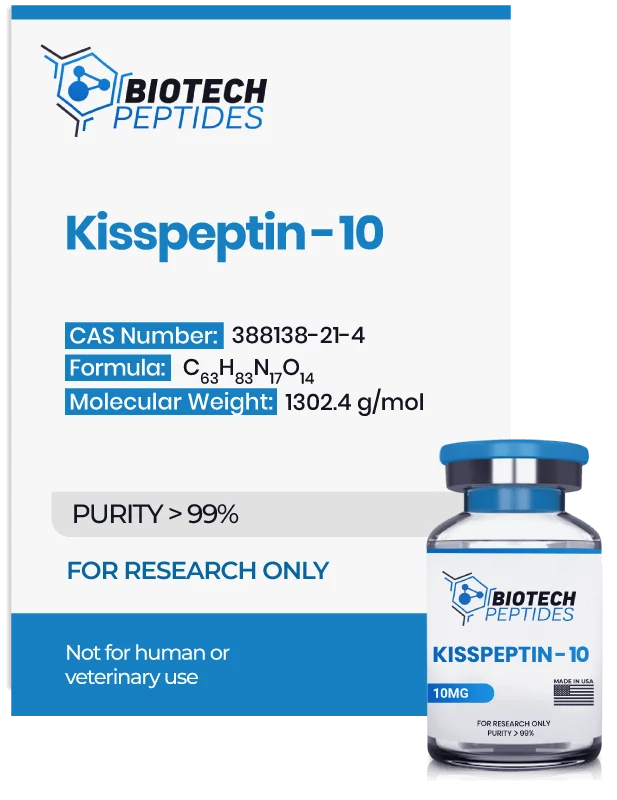
Kisspeptin-10 (10mg)
$40.00
kisspeptin-10. kisspeptin 10, kisspeptin 10 dosage, kisspeptin-10 dosage schedule, kisspeptin-10 dosage men, kisspeptin-10 bodybuilding dosage, kisspeptin-10 dosage, kisspeptin-10 dosage calculator, kisspeptin 10 dosage calculator, speptin 10 peptide
Kisspeptin-10 for Sale: A Comprehensive Research Guide
The search for kisspeptin-10 for sale has grown significantly as researchers investigate this multifunctional decapeptide for its diverse biological activities, ranging from reproductive endocrinology to cancer research and neuroprotection. Kisspeptin-10 (Kp-10) is the minimal biologically active fragment of the kisspeptin family, derived from the KISS1 gene product. With a molecular formula of C63H83N17O14 and a molecular weight of approximately 1302.5 Daltons, this decapeptide is a single, non-glycosylated polypeptide chain containing 10 amino acids. This comprehensive guide provides researchers with essential information for those looking to purchase kisspeptin-10 for sale, covering its chemical properties, mechanism of action, research applications, and quality considerations.
Understanding kisspeptin-10 for sale
Kisspeptin-10 is a synthetic decapeptide composed of 10 amino acids with the sequence Tyr-Asn-Trp-Asn-Ser-Phe-Gly-Leu-Arg-Phe-NH2 (YNWNSFGLRF-NH2). The peptide is the smallest fragment of the kisspeptin family that retains full biological activity at the kisspeptin receptor. The peptide is typically supplied as a white to off-white lyophilized powder with purity specifications of at least 95% to 98% when analyzed by high-performance liquid chromatography.
The chemical properties of kisspeptin-10 include a CAS number of 374675-21-5, a molecular formula of C63H83N17O14, and a molecular weight of approximately 1302.46 g/mol. Proper storage of kisspeptin-10 at -20°C in a dry, desiccated environment protected from light is essential for maintaining peptide integrity. Upon reconstitution, the peptide should be stored at 4°C and used within a short timeframe to prevent loss of potency.
Kisspeptin-10 functions as a natural ligand for the G-protein coupled receptor GPR54, also known as the kisspeptin receptor or KISS1R. This receptor is expressed in various tissues, including the brain, pituitary gland, gonads, and placenta. The peptide’s primary function is the regulation of the hypothalamic-pituitary-gonadal axis, playing a crucial role in the initiation and maintenance of reproductive function. Beyond its reproductive functions, kisspeptin-10 is involved in various other biological processes, including cancer metastasis inhibition and neuroprotection.
Mechanism of Action kisspeptin-10 for sale
Hypothalamic-Pituitary-Gonadal Axis Regulation
Kisspeptin-10 acts as a master regulator of the reproductive axis by stimulating the release of gonadotropin-releasing hormone (GnRH) from hypothalamic neurons. This action is mediated through the binding of kisspeptin-10 to the GPR54 receptor on GnRH neurons, which triggers intracellular signaling cascades that lead to the release of GnRH. The released GnRH then acts on the anterior pituitary gland to stimulate the release of luteinizing hormone (LH) and follicle-stimulating hormone (FSH), which in turn regulate gonadal function.
The action of kisspeptin-10 on GnRH neurons is crucial for the onset of puberty and the maintenance of normal reproductive function. The peptide’s ability to stimulate GnRH release makes it a valuable research tool for studying the regulation of the reproductive axis. Researchers investigating kisspeptin-10 for sale for reproductive endocrinology studies utilize the peptide to explore the mechanisms underlying fertility and reproductive disorders.
Cancer Research and Metastasis Inhibition kisspeptin-10 for sale
Kisspeptin-10 has been extensively studied for its role in cancer biology, particularly its ability to inhibit tumor metastasis. The peptide’s metastasis-suppressing effects are mediated through its binding to the GPR54 receptor, which activates intracellular signaling pathways that inhibit cell migration and invasion. Research has demonstrated that kisspeptin-10 can suppress the metastasis of various cancer types, including breast cancer, melanoma, and ovarian cancer.
The molecular mechanism underlying this effect involves the activation of downstream signaling pathways that regulate cell adhesion, migration, and invasion. Studies have shown that kisspeptin-10 can reduce the expression of matrix metalloproteinases, which are enzymes that degrade the extracellular matrix and facilitate cell invasion. This makes kisspeptin-10 a compound of significant interest for researchers investigating cancer metastasis and potential therapeutic interventions.
Neuroprotection
Emerging research suggests that kisspeptin-10 may have neuroprotective properties. Studies have explored the peptide’s potential to protect neurons from various forms of stress and injury. The mechanisms underlying these neuroprotective effects may involve the modulation of oxidative stress, inflammation, and apoptotic signaling pathways. These findings position kisspeptin-10 as a compound of interest for researchers investigating neuroprotection and neurodegenerative conditions.
Research Applications kisspeptin-10 for sale
Reproductive Endocrinology
The primary research application of kisspeptin-10 is in reproductive endocrinology. Researchers investigating the mechanisms controlling puberty, fertility, and reproductive function utilize kisspeptin-10 to study the regulation of the hypothalamic-pituitary-gonadal axis. The peptide’s ability to stimulate GnRH and gonadotropin release makes it a valuable tool for exploring the neuroendocrine control of reproduction.
Studies have used kisspeptin-10 to investigate the role of kisspeptin signaling in various reproductive disorders, including delayed puberty, precocious puberty, and infertility. The peptide has been used to explore how kisspeptin neurons integrate signals from various endocrine, metabolic, and environmental factors to regulate reproductive function.
Cancer Research
Kisspeptin-10 has been extensively studied for its anti-metastatic properties in cancer research. Researchers investigating tumor metastasis and the molecular mechanisms underlying cancer cell invasion and migration utilize kisspeptin-10 to study these processes. The peptide’s ability to inhibit cancer cell migration and invasion makes it a valuable tool for exploring the biology of metastasis.
Studies have investigated the effects of kisspeptin-10 on various cancer cell lines, including breast cancer, melanoma, and ovarian cancer. Research has explored how kisspeptin-10 influences the expression of genes and proteins involved in cell adhesion, migration, and invasion. These investigations contribute to understanding the potential therapeutic applications of kisspeptin-10 in cancer research.
Neuroprotection
Emerging research has explored the potential neuroprotective properties of kisspeptin-10. Studies have investigated the peptide’s ability to protect neurons from oxidative stress, excitotoxicity, and other forms of neuronal injury. Researchers have explored how kisspeptin-10 modulates signaling pathways involved in neuronal survival and death.
The peptide’s potential neuroprotective effects have implications for research into neurodegenerative conditions. Researchers investigating conditions such as Alzheimer’s disease, Parkinson’s disease, and stroke may find kisspeptin-10 a compound of interest for exploring neuroprotective mechanisms.
Metabolic Research Kisspeptin-10 for Sale
Kisspeptin-10 has been investigated for its potential role in metabolic regulation. Research has explored how kisspeptin signaling influences energy balance, glucose metabolism, and insulin sensitivity. The peptide’s effects on metabolic function suggest that it may have applications in metabolic research.
Studies have investigated the relationship between kisspeptin signaling and metabolic disorders. Research has explored how kisspeptin-10 influences food intake, energy expenditure, and metabolic hormone secretion. These investigations contribute to understanding the complex relationship between reproductive and metabolic regulation.
Placental and Pregnancy Research Kisspeptin-10 for Sale
Kisspeptin-10 has been studied for its role in placental development and pregnancy. The peptide and its receptor are expressed in the placenta, and research has explored their potential functions in trophoblast invasion and placentation. Studies have investigated the role of kisspeptin signaling in pregnancy-related conditions, including preeclampsia.
Quality Considerations for Research Peptides
Purity Standards kisspeptin-10 for sale
For those seeking kisspeptin-10 for sale for research purposes, quality standards are essential. Research-grade kisspeptin-10 should demonstrate minimum purity specifications of at least 95% when analyzed by HPLC, with many suppliers offering products at 98% purity or higher. High-purity research peptides are critical for experimental reproducibility, as impurities from synthesis can confound experimental results.
Analytical Verification Kisspeptin-10 for Sale
When acquiring kisspeptin-10, researchers should ensure the supplier provides comprehensive analytical documentation. The certificate of analysis should include identity confirmation by mass spectrometry, purity by HPLC, sequence confirmation, and appearance testing. Additional testing may include residual solvent analysis, water content, acetate content, peptide content, endotoxin testing, and microbial limit testing.
Documentation Requirements
Legitimate suppliers offering kisspeptin-10 for sale should provide batch-specific Certificates of Analysis containing HPLC chromatograms and mass spectrometry identity confirmation. Third-party lab accreditation and pre-purchase document access are indicators of reliable sourcing. Researchers should verify that these documents are available before completing any transaction.
Storage and Handling
Kisspeptin-10 is typically supplied as a lyophilized powder, which helps preserve peptide stability during storage and transportation. Researchers should store lyophilized kisspeptin-10 at -20°C in a dry, desiccated environment protected from light. Upon reconstitution, the peptide should be stored at 4°C and used within a short timeframe to prevent loss of potency.
Regulatory Status and Legal Considerations
Kisspeptin-10 is classified as a research-use-only product for laboratory investigations. These compounds are not approved for human use outside of clinical trials and are intended exclusively for in-vitro laboratory research. Researchers must ensure compliance with all applicable regulations regarding the acquisition, handling, and use of research peptides in their jurisdiction.
Conclusion kisspeptin-10 for sale
Kisspeptin-10 represents a compound of significant research interest across multiple scientific disciplines, from reproductive endocrinology and cancer research to neuroprotection and metabolic studies. Its diverse biological activities, ranging from the regulation of the hypothalamic-pituitary-gonadal axis to the inhibition of cancer metastasis, position kisspeptin-10 as a valuable research tool for investigating fundamental biological processes.
For researchers acquiring kisspeptin-10, understanding the compound’s chemical properties, quality requirements, and research applications is essential. High-purity research-grade kisspeptin-10, stored and handled properly, provides a valuable tool for investigating fundamental biological processes. When evaluating suppliers offering kisspeptin-10 for sale, researchers should prioritize those that provide comprehensive quality documentation, including HPLC purity verification and mass spectrometry confirmation, to ensure experimental reproducibility and scientific validity.
The research applications of kisspeptin-10 continue to expand as understanding of its mechanisms and potential applications deepens. From reproductive endocrinology and cancer research to neuroprotection and metabolic studies, kisspeptin-10 remains a compound of significant interest for researchers committed to scientific discovery. As the field of peptide research advances, kisspeptin-10 will undoubtedly continue to contribute to our understanding of fundamental biological processes and potential research applications.
Related products
BIOTECH PEPTIDE
BIOTECH PEPTIDE
BIOTECH PEPTIDE
BIOTECH PEPTIDE
BIOTECH PEPTIDE
BIOTECH PEPTIDE
BIOTECH PEPTIDE
BIOTECH PEPTIDE